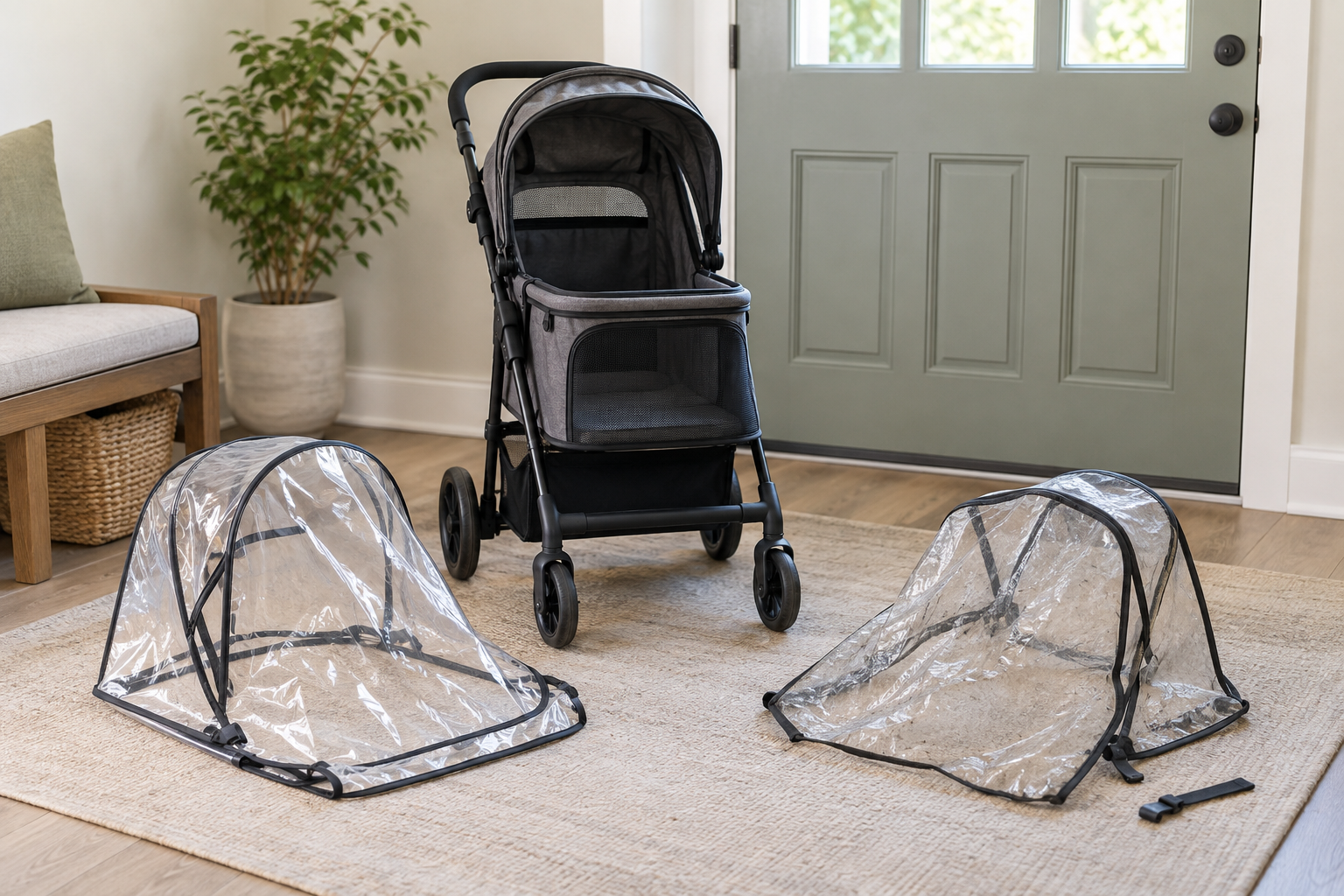
A rain cover is a convenience layer for appropriate short outings, not temperature control, storm protection, crash protection, or permission to leave a pet unattended. Follow both makers' directions, keep the stroller within sight, monitor the pet, and turn back when weather or temperature makes the outing unsuitable. Ask a licensed veterinarian about outings for a pet with breathing, temperature-regulation, mobility, or other health concerns.
Quick Decision: Replace, Postpone, or Skip
Replace the cover when the stroller passes inspection, still fits the pet and route, and a compatible cover supports a recurring damp-weather routine. Postpone the outing when rain is occasional and waiting is practical. Use another appropriate setup when a dry indoor route or correctly fitted carrier already solves the trip. Replace or professionally assess the stroller when wear affects its structure or operation. Skip when compatibility, airflow, access, or useful frequency cannot be established.
Inspect the Stroller Before Buying an Accessory
- Frame and fold: Look for bent parts, uncertain locks, sharp edges, or a fold that no longer operates as directed.
- Wheels and brakes: Check attachment, movement, tread, and brake operation on the empty stroller.
- Cabin and closures: Inspect mesh, seams, doors, zippers, and any internal attachment system.
- Canopy and fasteners: Confirm the structure that will carry the cover opens fully and has intact attachment points.
- Current fit: Recheck the pet's measurements and the maker's current size and weight guidance.
A new sheet cannot correct structural wear, unreliable controls, damaged closures, a cramped cabin, or an unsuitable route. Resolve those questions before adding another layer.
How Often Would You Actually Use It?
Count real damp-weather outings from the last several months rather than imagined future trips. A replacement is easier to justify when the stroller is part of a regular necessary routine and light rain frequently interrupts it. It earns less space when outings are flexible, the wet season is brief, or another dry option already works.
Include storage and setup friction in the calculation. The cover needs somewhere to dry fully, a place to stay with its attachments, and enough setup time that you will not be tempted to install it loosely. A rarely used accessory that is difficult to identify, unfold, or dry may not improve the routine.
Exact Compatibility Beats a “Universal” Label
Find the stroller brand, model, and model year when available. Prefer current maker documentation for an exact replacement. For a universal option, measure the stroller with its canopy fully open: length along the cover path, widest canopy and cabin points, front and rear drop, handle clearance, and the proposed lower attachment areas.
Map each mesh panel, entrance, zipper, brake, wheel, hinge, and fold point. The installed cover should not obscure the monitoring view, seal intended ventilation, press against the pet's usable space, trail near wheels, or interfere with controls. Similar-looking stroller photos do not prove compatibility.
Ventilation and Access Are Buy-or-Skip Criteria
Transparent material can lie against mesh or make vents difficult to see once it wrinkles. Compare the cover's intended openings with the stroller's ventilation layout while installed exactly as directed. Do not tape vents shut, improvise a sealed enclosure, or rely on a partly open zipper as an unverified airflow plan.
Confirm you can reach the cabin promptly without detaching a complicated series of straps. Any access panel should align with the stroller entrance and operate without pulling the cover across vents. If you cannot monitor the pet clearly or open the cabin as intended, the cover is a poor fit even when its outer dimensions appear close.
Check Attachments, Folding, and Visibility
Tabs, elastic edges, and straps should connect only at suitable points identified by the instructions. Install the cover on the empty stroller, then push, turn, operate the brakes, and check clearances before an outing. Remove it before folding when either maker directs you to do so.
Inspect clear panels for cloudiness, cracks, stiff creases, rough edges, loose trim, and strong odor. Water droplets and reflections can reduce visibility even when the sheet is transparent, so the cover should never replace frequent direct checks.
Cleaning and Storage Change the Value
Follow the cover maker's cleaning directions and let every surface and attachment dry before folding. Compare whether seams and corners are reachable, whether the clear material has special cleaner restrictions, and whether the cover can be stored without a tight permanent crease. Keep it labeled with the stroller model so it is not later guessed onto another frame.
Skip the category if the proposed storage spot encourages the cover to stay damp, if the pet can chew loose material during setup, or if replacing a small failed tab would require discarding an otherwise maintainable cover without first checking maker-supported parts or repair guidance.
When the Existing Stroller Is the Real Question
Do not let a relatively small accessory purchase anchor you to a stroller that no longer fits. If the pet, route, vehicle space, home storage, cabin access, or handling needs have changed, compare the whole setup instead. The short-errand pet stroller guide covers cabin dimensions, wheels, brakes, folding, cleaning, and route fit.
If the stroller remains appropriate and replacement passes this audit, the replacement rain-cover buying guide compares maker-specific, tab-attached universal, and zip-front varieties. For cabin cleanup, compare washable stroller liners separately rather than asking the weather cover to solve interior messes.
Bottom Line
A replacement pet stroller rain cover is worth it when the stroller remains sound and correctly fitted, wet outings recur, and you can verify compatibility, ventilation, access, attachments, visibility, care, and weather limits. Postpone or use another appropriate setup when rain is rare. Skip the accessory when fit is guesswork or when stroller condition—not the missing cover—is the problem.