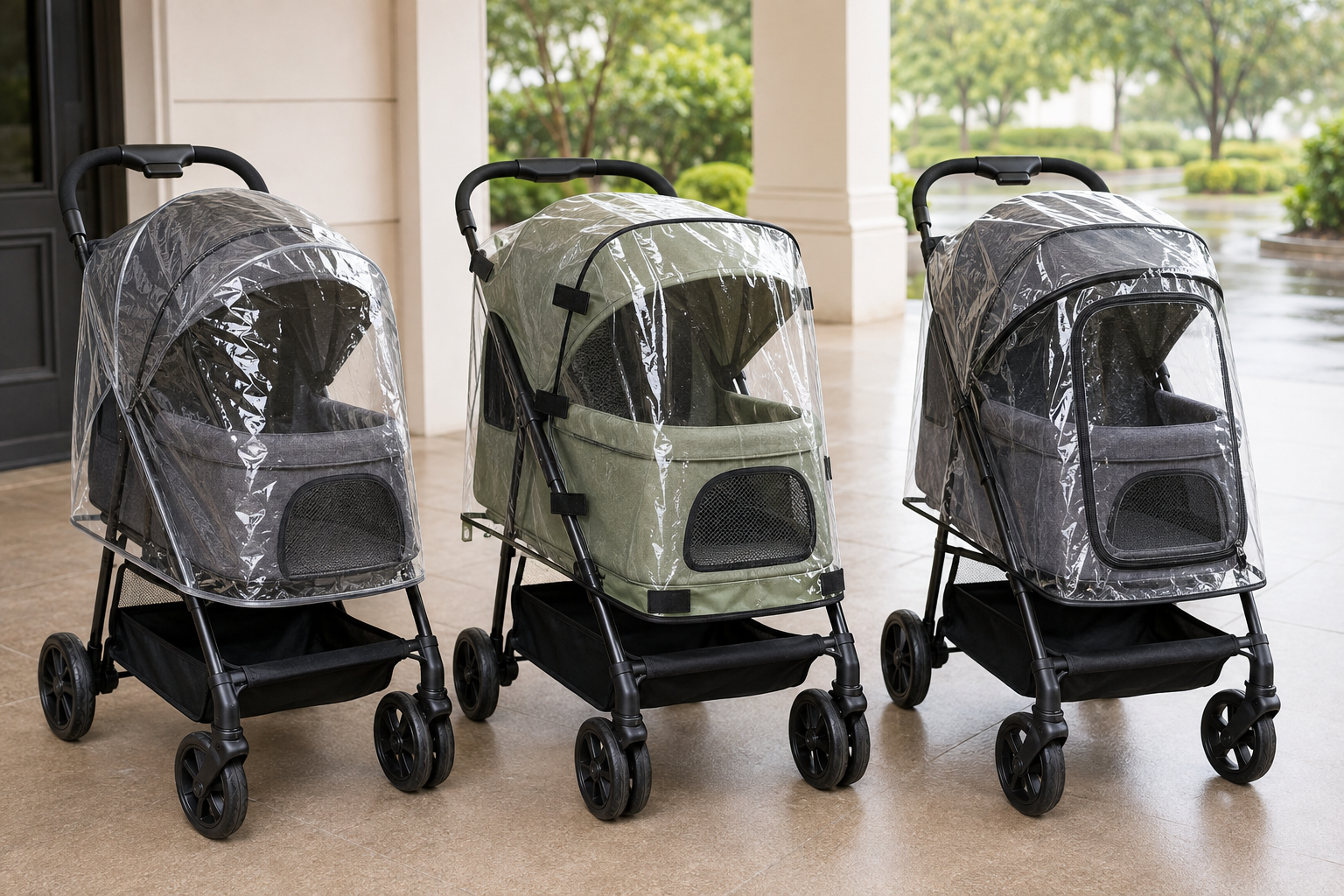
Not sure whether another cover earns its place? Start with the replacement pet stroller rain-cover worth-it test, which checks stroller condition, use frequency, compatibility, and skip criteria before shopping.
A rain cover is a short-outing weather layer, not temperature control, storm protection, crash protection, or permission to leave a pet unattended. Keep the stroller within sight, maintain airflow, check the pet frequently, and turn back when weather or temperature makes the outing unsuitable. Ask a licensed veterinarian about travel for a pet with breathing, temperature-regulation, mobility, or other health concerns.
Quick Pick by Replacement Situation
Choose a maker-specific cover when the stroller company currently documents compatibility with your exact model. Consider a measured universal tab cover when every critical dimension and opening aligns and secure attachment does not interfere with stroller operation. Consider a zip-front universal cover when verified fit and easy cabin access both matter. Skip the purchase when the listing lacks usable measurements, blocks ventilation, conflicts with the manual, or the stroller itself is damaged.
Identify the Stroller Before Measuring
Find the brand, model, and model year if available on the frame label, manual, receipt, or maker's support pages. Strollers that look alike can differ at the canopy, handle, frame joints, brake bar, and cabin opening. A listing photo is not proof of fit.
If the maker sells a replacement, read its current compatibility and use instructions. If the original cover failed unusually early, inspect the canopy, fasteners, and frame for bent, sharp, or missing parts before putting a new sheet over the problem.
Take the Measurements That Change Fit
- Open-canopy length: from the front edge to the rear edge along the cover path.
- Canopy width and cabin width: at the widest points the cover must pass.
- Front drop: from canopy edge to the intended lower attachment area.
- Handle and rear opening: so the cover does not crowd the pushing position or seal an intended opening.
- Fold and brake clearance: because no cover should catch moving joints, wheels, or controls.
Compare your measurements with a dimensional diagram, not only a “small,” “medium,” or “universal” label. Leave the clearance required by both makers rather than trying to stretch a near miss into place.
Keep Every Intended Ventilation Path Open
Map the stroller's mesh panels and the cover's vents while both are fully installed. Clear material can make openings harder to notice, especially when it wrinkles against mesh. Do not tape over vents, improvise a sealed enclosure, or assume a partially open zipper provides enough airflow.
Watch for fogging, heat buildup, persistent panting, distress, unusual quietness, or a pet trying to escape. End the outing and remove the pet to an appropriate environment when anything seems wrong; seek veterinary help for concerning symptoms.
Compare Access and Attachment
A large zippered panel can simplify loading or a quick check, but only if the opening lines up with the stroller entrance and the zipper operates without pulling the cover across ventilation. Tabs and elastic edges should attach only where directed and should stay away from wheels, hinges, brakes, and loose reach inside the cabin.
Before putting a pet in the stroller, install the cover, push the empty stroller, operate the brakes, turn, and check every attachment. Then confirm that the cover does not change how the stroller folds; remove it first if either maker directs you to do so.
Material, Visibility, Cleaning, and Storage
Read the current material description rather than assuming all clear covers are the same. Inspect for strong odor, cloudy panels, stiff creases, unfinished edges, loose trim, or cracks. A transparent front should preserve the sightline needed to monitor the pet, but reflections and water droplets can still reduce visibility.
Follow the cover maker's cleaning and drying directions. Let it dry fully before folding, and do not store it tightly creased if the instructions warn against that. Keep attachments together in a labeled bag so the next setup is complete.
Who Should Skip a Replacement Cover?
Skip one when you cannot document or measure a safe fit, when the cover blocks intended airflow or access, or when it would be used in severe weather or temperatures outside maker guidance. Replace or professionally assess the stroller instead when frame, brake, wheel, zipper, cabin, tether, or canopy damage affects ordinary use. A new cover cannot repair structural wear.
Connect the Rest of the Outing Setup
For routine cabin messes, compare washable stroller liner formats by restraint-slot fit, backing, attachment, and laundry. For packing water and cleanup supplies without overloading the stroller, use the everyday pet outing kit checklist. Owners choosing a carrier instead can compare backpack and shoulder-carrier formats by pet fit and handling.
Bottom Line
A documented maker-specific cover is the cleanest replacement path. A universal cover can be practical only when its measurements, ventilation, access, attachments, folding, and weather limits all match the stroller and routine. If those facts are missing, do not use “universal” as a reason to guess.