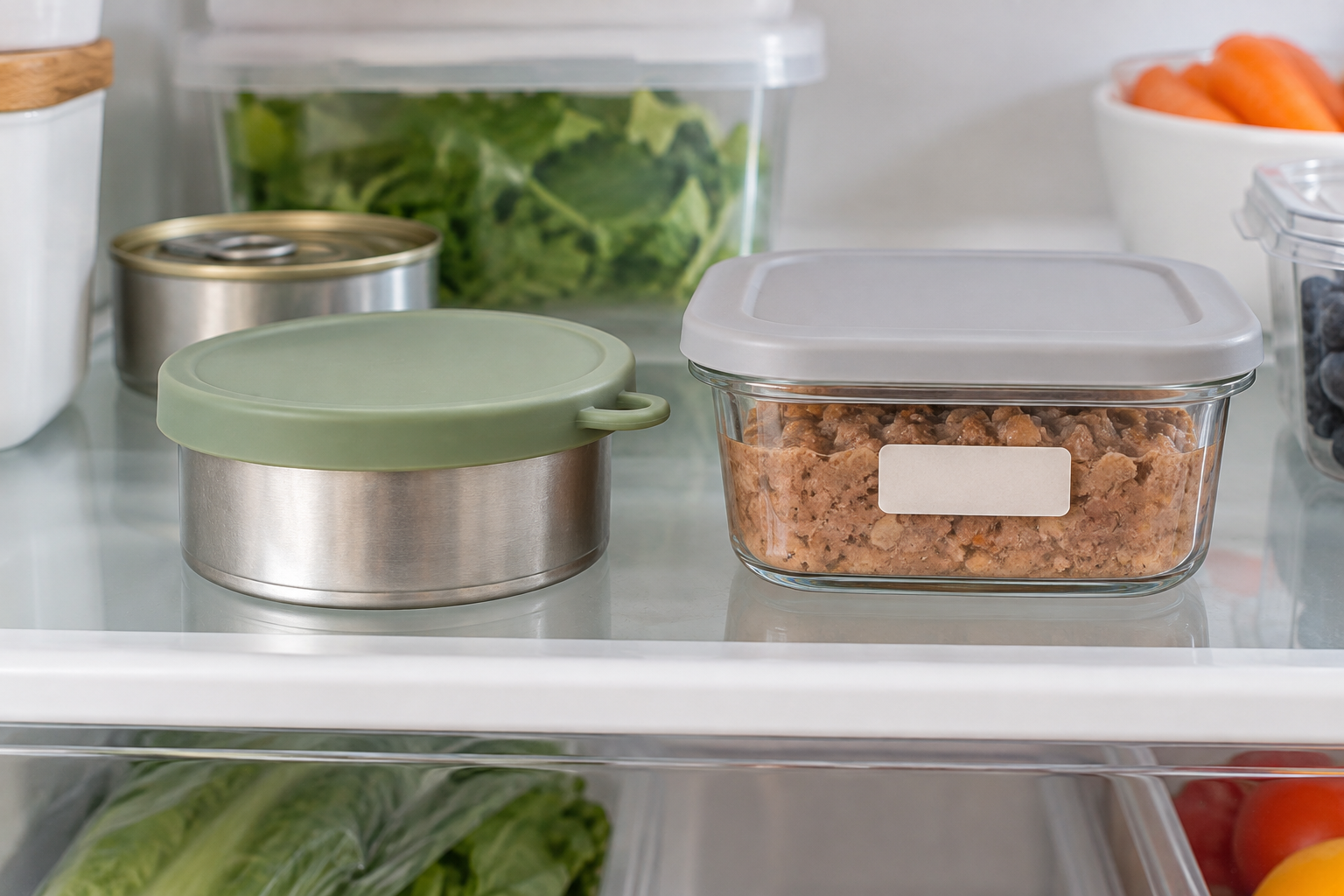
This comparison is about storage format, not feeding amounts or how long a particular food remains suitable. Follow the product label and manufacturer directions for refrigeration and disposal. Ask a veterinarian about feeding, diet, appetite, or illness concerns rather than relying on a storage accessory.
Quick Decision
- Choose a can cover when the same verified rim size appears often, the covered can fits the shelf, and keeping the original label is useful.
- Choose a reusable container when can sizes vary, a labeled low-profile shape fits better, or an exposed can edge makes the routine awkward.
- Use what you own when an existing suitable container already closes, labels, stacks, and washes well.
- Skip both for now when the food label does not support the planned storage routine or you cannot reliably identify and date transferred food.
The Main Tradeoff: Original Package vs Transfer
A can cover leaves the food in its original package, so the label, lot details, and directions stay with it. That makes the daily action small: fit the cover, refrigerate as directed, remove it, and wash it. The weakness is compatibility. A lid that almost fits is not a dependable closure, and a tall covered can may waste vertical shelf space.
A reusable container separates the food from the can. That can provide a lower or more stackable shape, but it adds scraping, labeling, and another item to wash. Retain the original package information until the food is used or discarded, and avoid mixing a new portion into an unwashed container holding an older one.
Measure Fit Before Comparing Materials
For a cover, measure the outside diameter and rim profile of every can size in the routine. Compare those measurements with the maker's stated fit range, then check pull-tab clearance and the total covered height inside the refrigerator. “Universal” is not a substitute for dimensions.
For a container, compare stated usable capacity with the amount normally left after opening. Check the full external footprint, lid overhang, stacked height, and whether the opening is wide enough for easy transfer and cleaning. Oversizing can consume shelf space; undersizing invites messy overfilling.
Closure, Labels, and Daily Identification
Look for a cover that seats evenly without excessive force and has a tab you can grip with clean hands. For containers, inspect the lid geometry, closure points, replacement-part availability if relevant, and whether the shape stays stable on the shelf. Do not infer a seal or food-contact claim that the maker does not state.
A can retains its printed identity, but several identical covered cans can still be confusing. A clear container shows contents but not necessarily the exact food or opening date. Use a removable label or another simple household system that remains readable through refrigeration and washing.
Cleaning and Material Checks
Read current material and food-contact statements rather than assuming from appearance. Follow the maker's dishwasher, hand-wash, drying, temperature, and replacement directions. Pay attention to cover rings, pull tabs, lid channels, hinges, gaskets, and corners where residue can collect.
Choose the format you will actually clean promptly and dry fully. Replace pieces that are cracked, warped, permanently rough, difficult to close, or no longer cleanable according to their directions. A convenience item is only useful when its small parts do not become a neglected chore.
Who Should Skip a Dedicated Can Cover?
Skip it if can diameters change frequently, the shelf cannot accommodate the covered height, or an existing container already handles the job. It is also a poor match when limited hand strength makes the stated removal action difficult or the cover cannot be kept away from pets that mouth loose items.
Who Should Skip Transferring to a Container?
Skip the transfer when preserving package identification is hard, the extra scraping and washing will not happen reliably, or the only available container is too large, damaged, difficult to close, or not documented for the intended use. Keeping food in a properly covered original package may be the simpler routine when the label permits it.
Red Flags Before Buying
- No usable dimensions, material information, or care directions are provided.
- A cover listing relies on “fits all cans” without a measurable range.
- A container's capacity is listed but its external shelf footprint is not.
- The closure is hard to inspect or has channels you cannot reasonably clean.
- The listing promises to extend freshness beyond the food maker's directions.
- The setup makes it harder to retain labels, dates, or lot information.
Connect This Choice to the Feeding Setup
Keep refrigerator storage close enough to the normal routine that labeling, serving, and washing remain consistent. The new-pet essentials guide helps separate useful feeding supplies from clutter, while the low-mess feeding station guide covers bowl footprint, mats, and cleanup. Sudden appetite changes, vomiting, diarrhea, pain, or other health concerns call for veterinary guidance, not a different lid.
Bottom Line
Choose a reusable can cover for a known rim size, minimal transfer, and easy access to the original label. Choose a reusable fridge container for a measured low-profile shape, clearer labeling, or variable package sizes—if the extra transfer and washing fit your routine. In either case, verify the product details and follow the pet food maker's storage directions.