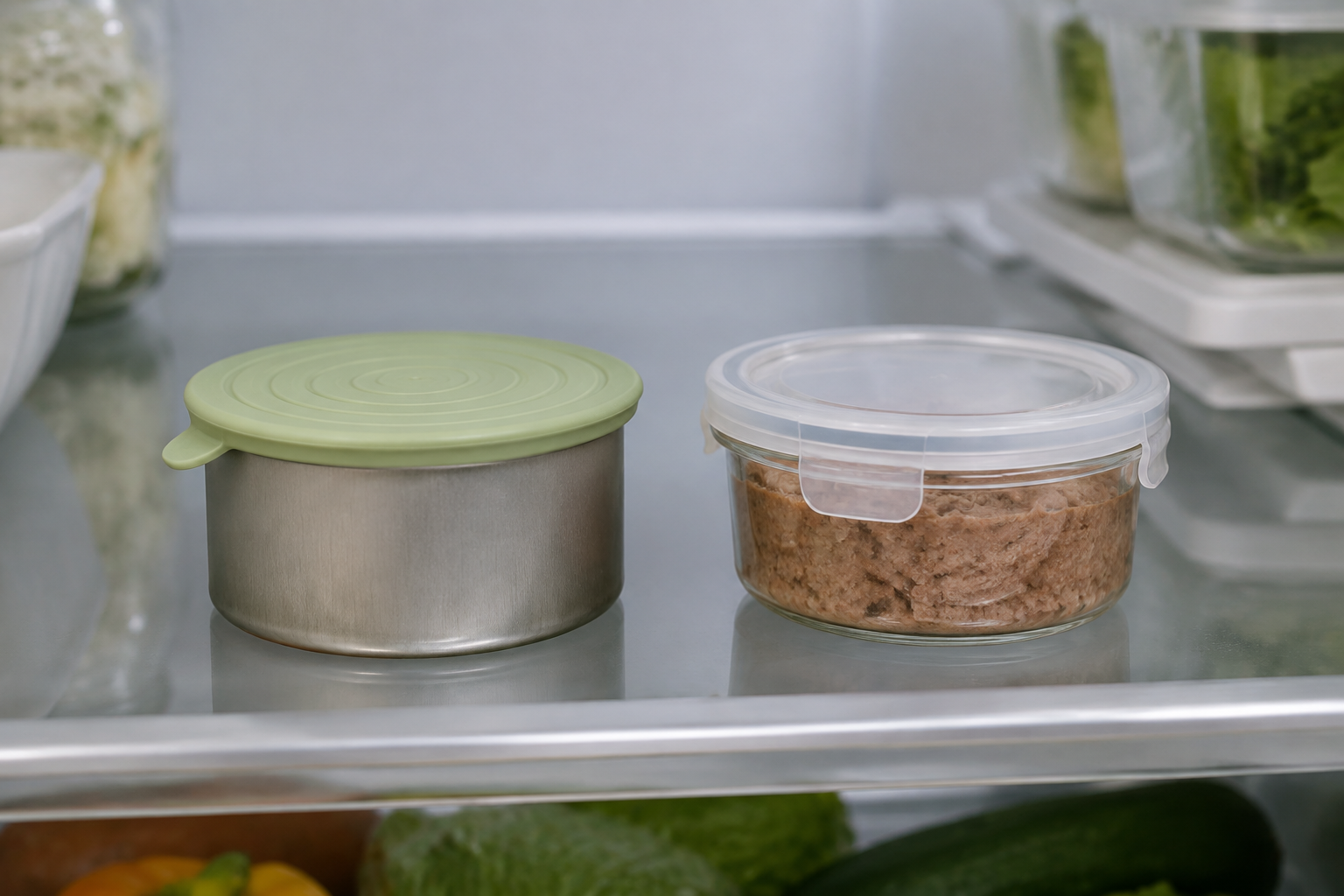
A can cover is a refrigerator-organization convenience, not a freshness, nutrition, or health solution. The food maker's package directions determine how to refrigerate and discard the food.
Quick Decision: Buy, Transfer, or Skip
Buy a fitted cover when you often have part of the same measured can left, the cover seats normally, and the covered can fits your refrigerator. Transfer the food when a suitable container you already own closes, labels, stacks, and washes more conveniently. Skip both purchases when leftovers are unusual or the package directs you to another storage method.
Audit Your Routine Before Shopping
For a week or two, note which can sizes actually leave leftovers, where the opened package sits, and what you already use. A dedicated cover earns its place only when it removes a repeated transfer-and-wash step without creating a confusing collection of almost-fitting lids.
Also check whether you need to identify several foods or opening dates. A separate container may offer more labeling space, while color-coded covers can distinguish cans only if everyone in the household follows the same system.
Measure the Rim and Fridge Space
Measure the outside diameter of the can's top rim and compare it with the cover maker's current compatibility information. Note rolled edges, pull tabs, dents, and unusual shapes. Do not force a rigid cover onto a bent, sharp, or mismatched rim.
Measure the shelf height and the space around nearby containers too. A low cover can preserve the can's compact footprint, but a tall tab may interfere with stacking or a shelf above. If transferring, compare the container's usable capacity and exterior size rather than assuming a small-looking container will fit.
When a Cover Is the Simpler Choice
- One or two repeatable can sizes: a verified fit is easier than sorting through loose lids.
- Minimal handling: the food remains in its original package instead of moving to another vessel.
- Easy removal: the tab is large enough to grip without bending the can.
- Realistic care: grooves and the underside are reachable, and the cover can dry fully before reuse.
- Useful labeling: color or a writable surface supports the household's identification routine.
When an Existing Container Is Better
A lidded container can be more practical when can sizes vary, the original can is awkward to stack, or you need a broad writing surface. Use only a container whose maker documents the intended food-contact and refrigerator use, and follow its cleaning directions.
Transferring adds handling and another vessel to wash. Keep whatever package information you need to follow the food maker's storage, feeding, and discard directions. Do not mix a new portion into residue from an older one.
Cost and Maintenance Tradeoffs
The purchase price is only part of the decision. Count how many covers you realistically need, how often they will be washed, and whether unmatched pieces will accumulate. A multipack may be wasteful if only one diameter fits; one precisely matched cover can be the more restrained buy.
Inspect a reusable cover as you clean it. Retire it according to the maker's guidance if it cracks, splits, warps, develops a damaged edge, or no longer seats normally. A container with a worn closure or chipped edge also needs appropriate replacement.
Who Should Skip a Pet Food Can Cover?
Skip the category if you mainly use pouches, trays, cartons, or cans with no verified compatible rim. Skip a particular cover if it needs excessive force, leaves a visible gap, cannot be cleaned fully, or makes the can unstable. If your existing lidded container already works smoothly, a pet-specific cover is not necessary.
Never use a lid to keep a damaged, swollen, leaking, or questionable can in service. Follow the package instructions, and ask a veterinarian about food suitability, feeding amounts, refusal to eat, vomiting, diarrhea, or another health change.
Choose the Next Useful Guide
If a cover makes sense, compare multi-size, rigid, and stretch cover formats. For the wider feeding setup, use the starter pet supplies guide or decide whether a feeding mat is worth adding.
Compare the Two Storage Workflows
If both options still seem practical, compare a pet food can cover with a reusable fridge container by package fit, transfer effort, labeling, stackability, and washing before buying.
Bottom Line
A pet food can cover is worth it when one measured lid fits the cans you repeatedly refrigerate and saves more effort than transferring the food. Buy for a verified rim and a real routine. If an existing container already closes, labels, and washes well, reuse it and skip another gadget.