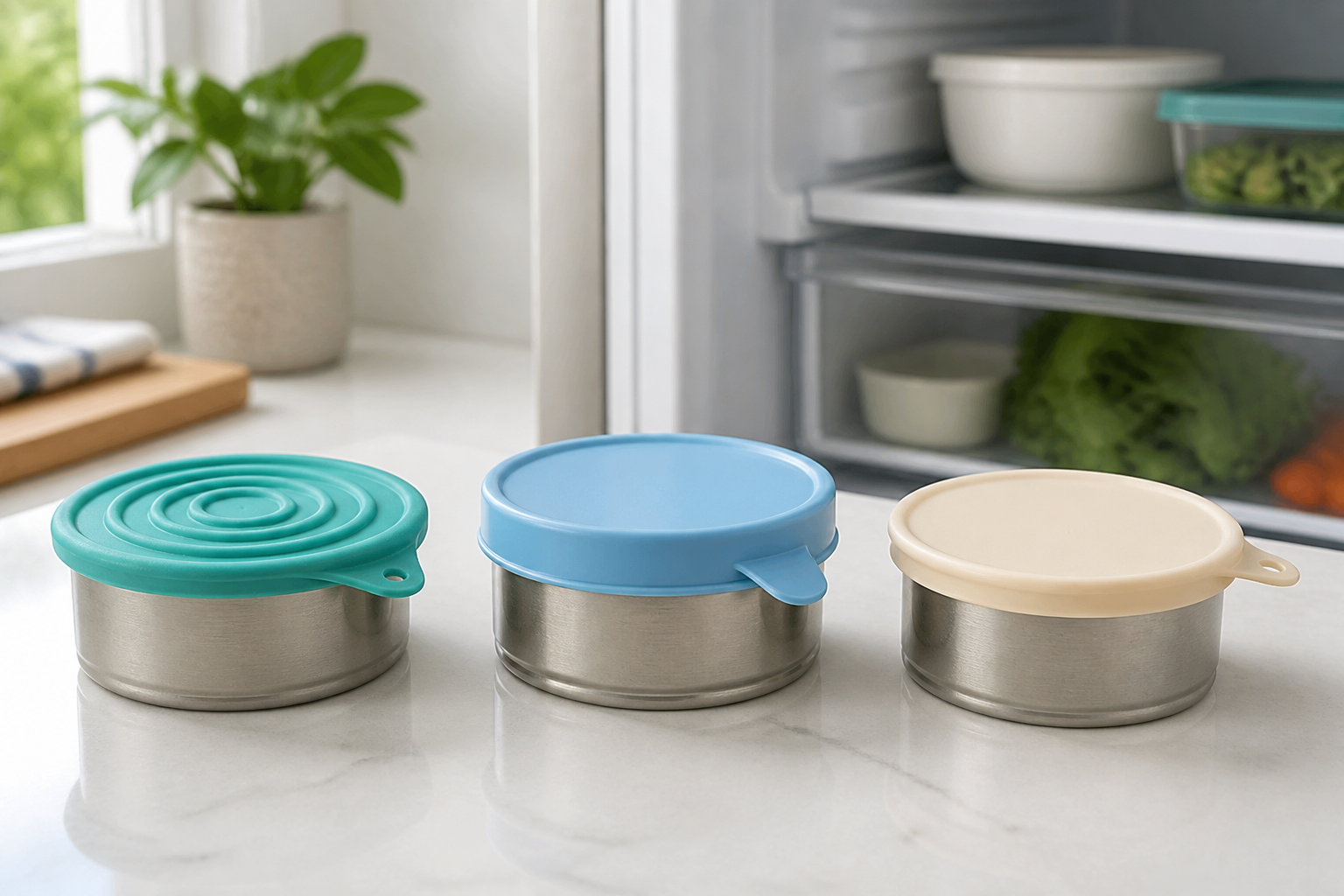
Quick comparison framework
- Multi-ring silicone: most flexible across documented diameters, but grooves need thorough cleaning and drying.
- Rigid snap-on: simple for one known rim size, but a near match can be either loose or frustratingly tight.
- Stretch cap: compact and flexible, but fit depends on the maker's stated stretch range and an undamaged rim.
- No reusable lid: use the food maker's recommended storage method when none of these formats fits securely.
Measure the can, not the label category
Measure the outside diameter at the top rim and note any rolled edge, pull-tab interference, or unusual shape. Compare that measurement with the cover maker's compatibility chart. Do not force a rigid cover onto a sharp, bent, or mismatched rim.
Selection criteria that matter
- Fit: Look for explicit supported diameters rather than a vague universal-fit claim.
- Closure: The lid should sit level and remove without bending the can or requiring unsafe force.
- Material documentation: Check the current listing for the maker's food-contact material statement; do not infer one from appearance.
- Cleaning: Grooves, tabs, and undersides should be reachable. Follow the maker's dishwasher or hand-wash directions and dry fully.
- Identification: Color-coded multipacks or writable labels can help separate foods, but label the contents and opening date according to your household routine.
- Storage footprint: Low-profile covers stack more easily, while tall tabs may need extra refrigerator clearance.
- Condition checks: Replace covers that crack, split, warp, remain odorous after cleaning, or no longer seat normally.
Food-storage boundaries
A cover contains an opened can; it does not determine how long the food remains suitable. Follow the food package's refrigeration and discard directions. Ask a veterinarian about feeding amounts, diet suitability, or a pet that refuses food, vomits, has diarrhea, or shows another health change.
Keep opened cans cold according to the label, avoid leaving them at room temperature beyond the maker's directions, and do not use a cover to hide a damaged, swollen, leaking, or questionable can.
Who should skip a reusable can cover
Skip these covers if your food comes in pouches, trays, unusually shaped tins, or cans with no verified compatible diameter. A separate lidded container may be easier when the package specifically permits transferring leftovers. Also skip any lid that requires force, leaves a visible gap, or cannot be cleaned completely.
The bottom line
Start with the measured rim. Multi-ring silicone lids suit mixed can sizes, rigid snap-on covers suit one repeated diameter, and stretch caps trade a compact shape for more fit sensitivity. Whichever format you choose, verify the current material and care details and follow the food maker's storage directions.