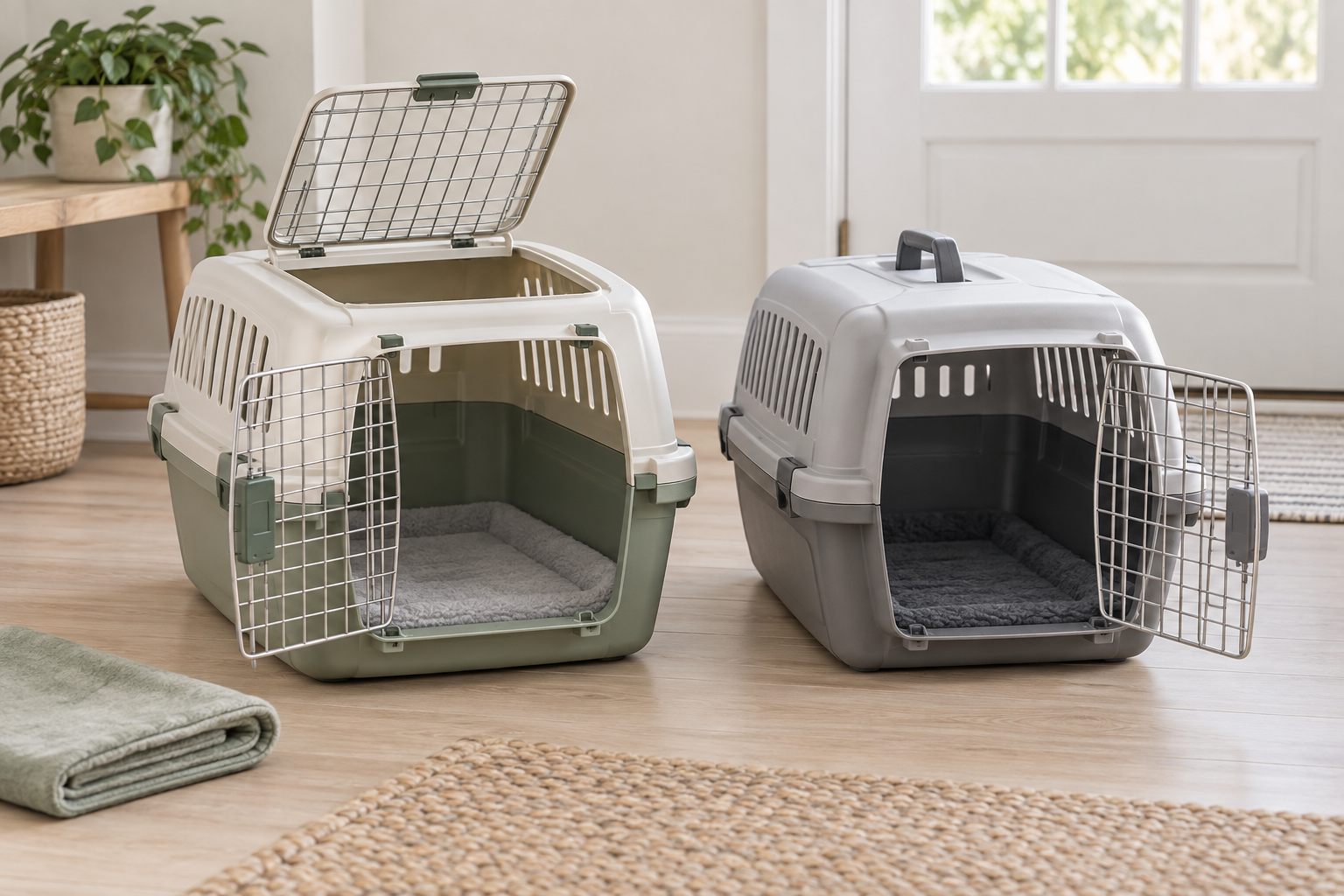
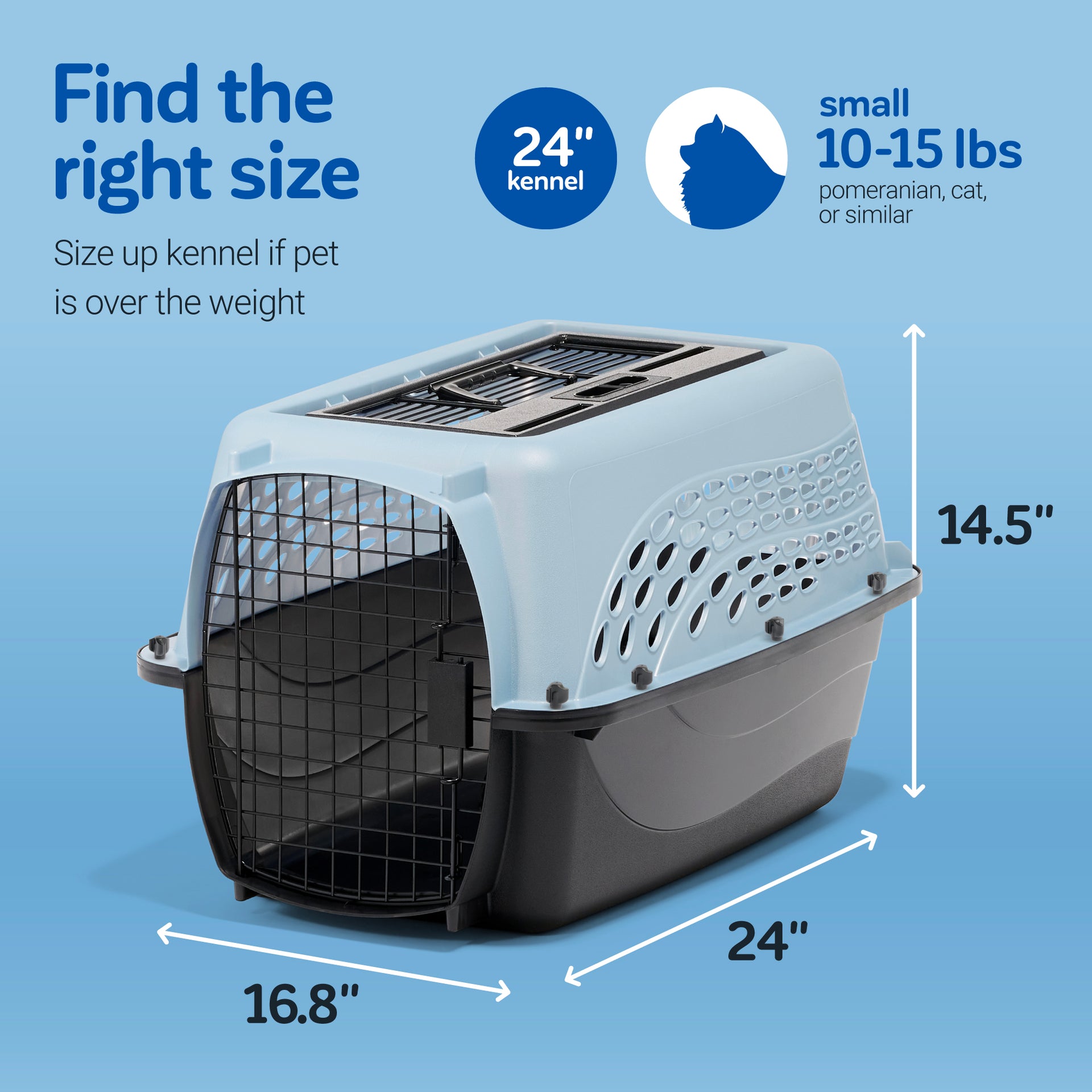
 Rigid top-and-front access
This is a practical door-layout comparison for routine appointments and short local trips. It is not an airline-approval, crash-safety, escape-proof, medical, or behavior-treatment claim. The whole carrier still needs appropriate fit, intact construction, clear ventilation, dependable closures, a supported base, and a carry method you can manage.
Quick Comparison
A top-load carrier adds an opening above the pet. It can give an owner or veterinary team another access direction, but it also adds hinges, latches, and clearance requirements to inspect.
A front-load carrier uses the end or side doorway as the main route. It can be a straightforward choice when the pet enters without being forced and the open door has enough room around it at home, in the car, and at the appointment.
A carrier with both doors may avoid an all-or-nothing decision. Buy that extra mechanism only when you expect to use it and can check every closure before each lift.
Measure the Pet, Interior, and Openings
Start with the carrier maker's current sizing directions and stated limits. Then compare your pet's normal standing height and body length with the carrier's usable interior, accounting for any liner. A product label or weight limit alone does not tell you whether the pet can rest in a natural position.
Measure the clear top opening and the narrowest useful part of the front doorway, not only the outside shell. Check whether door frames, latches, and bedding reduce that space. If the carrier is already owned, practice operating it while empty and stationary; never use a pet to test a questionable latch or tight opening.
When Top Access Fits the Routine
Top access earns its space when reaching from above is genuinely different from guiding the pet through the front. It may provide another way to place a calm small pet into a supported carrier or allow a veterinary professional to reach the pet without immediately using the front doorway. Whether that is appropriate depends on the pet, the carrier, and the professional's handling plan.
- Check overhead clearance: the top door must open fully without hitting a shelf, vehicle roof, or nearby wall.
- Check the lift: support the pet as directed rather than lowering by limbs, collar, or harness.
- Check every latch: close the top door, front door, shell fasteners, and any secondary catches before lifting.
- Check the handle: confirm that an open or closed top door does not interfere with the handle or your grip.
When Front Access Fits the Routine
Front access is the simpler fit when your pet can move through the measured doorway and you have room to align the carrier with a stable surface. Leaving an appropriate intact carrier open at home may let a pet approach it outside appointment time, but it does not guarantee stress-free loading.
- Check approach space: allow room for the door to swing and for the carrier to remain flat rather than balancing it on furniture.
- Check door height and width: make sure the frame does not require twisting or compressing the pet through a small opening.
- Check the closure path: bedding, paws, tail, tags, and loose fabric must stay clear of hinges, wire doors, and zippers.
- Check the exit plan: position the carrier as the clinic requests and let staff guide difficult handling.
Closures, Bedding, and Ventilation Matter More Than Door Count
A second door creates a second set of hardware to inspect. Look for intact hinges, latches, zippers, fasteners, and shell joints. Retire a carrier with cracks, sharp edges, torn mesh, spreading seam damage, a flexing base, or unreliable closures instead of treating another door as an upgrade.
Use only a thin, correctly fitted liner that lies flat, stays away from closures, and leaves usable height and ventilation. Remove wet or damaged bedding promptly and follow the maker's cleaning directions. Skip loose layers a pet chews, shreds, bunches, or pushes into the doorway.
Compare the Whole Cleaning, Carrying, and Storage Routine
Top doors can expose more of a rigid interior for wiping, but grooves around hinges and latches may need extra attention. Front-only hard carriers may have fewer moving parts; soft carriers add fabric, mesh, seams, zippers, and a removable base to the care routine. Every part should be fully dry before storage.
Judge carrying with the combined carrier, pet, and liner weight in mind. A top door is not helpful if its placement makes the handle awkward for you. Store the carrier assembled when the maker requires it, with every component dry and the closures easy to inspect before the next trip.
Who Should Skip Each Layout?
Skip paying extra for top access when the current front door is roomy and dependable, your pet enters it without unsafe handling, overhead clearance is limited, or another latch would add inspection work without changing the routine.
Skip a front-only layout when the measured doorway is a persistent physical constraint and your veterinary team recommends another access arrangement. Also skip any carrier—regardless of door location—that is too small, difficult for you to support, damaged, poorly ventilated, or incompatible with the trip.
When to Ask a Veterinarian or Qualified Professional
Call the veterinary team before transport when your pet is injured, painful, weak, having trouble breathing, unable to rest normally, or needs medical handling instructions. The clinic can tell you how to prepare for an urgent or mobility-limited arrival; a different door does not solve a medical problem.
For severe fear, repeated escape attempts, aggression, or handling that could injure the pet or a person, ask the veterinary team and an appropriately qualified, reward-based behavior professional for a transport plan. Do not force repeated loading attempts or rely on a product claim that promises calm behavior.
Bottom Line
Top access is worthwhile when its measured opening gives you or your veterinary team a genuinely useful second route and you can reliably inspect, close, lift, clean, and store the carrier. Front access is enough when the doorway fits the pet and the simpler setup works throughout the appointment routine. Choose the whole carrier by fit and condition first; choose the door layout second.
Next, decide whether top-loading access earns an upgrade at all, or use the pet carrier buying guide for broader structure and fit criteria. If your current carrier is worn or awkward beyond its door position, use the carrier upgrade decision guide.