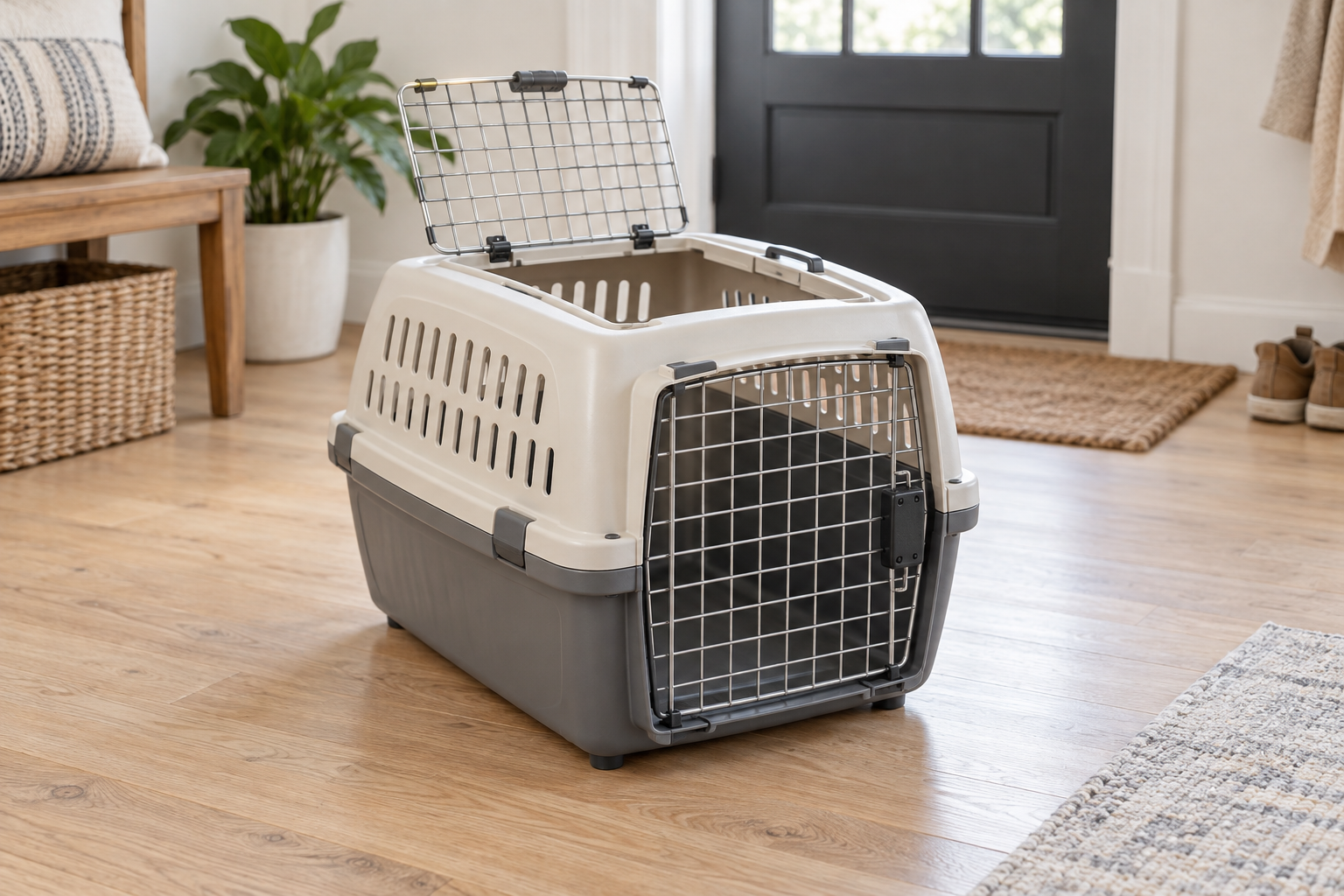
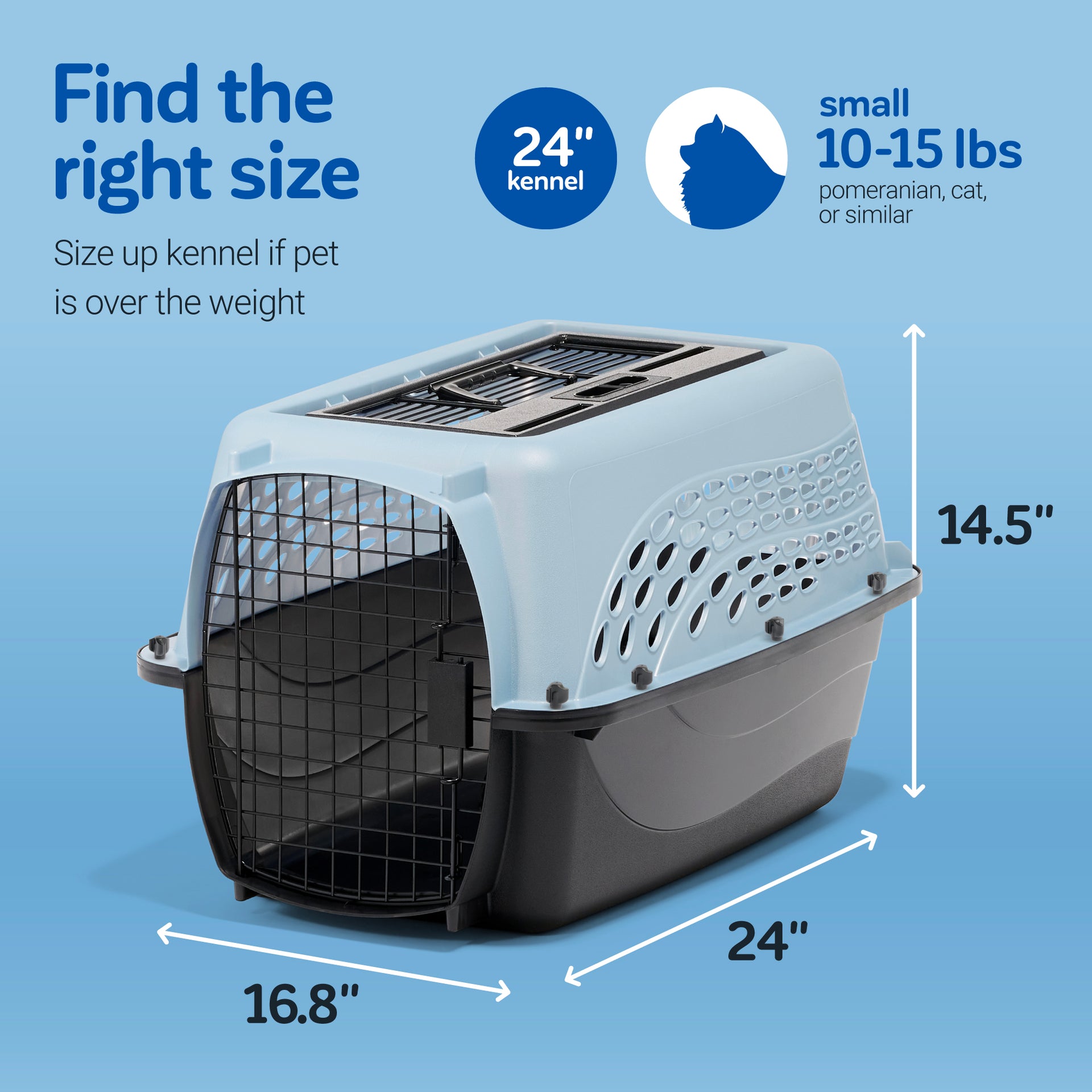
 Rigid top-and-front access
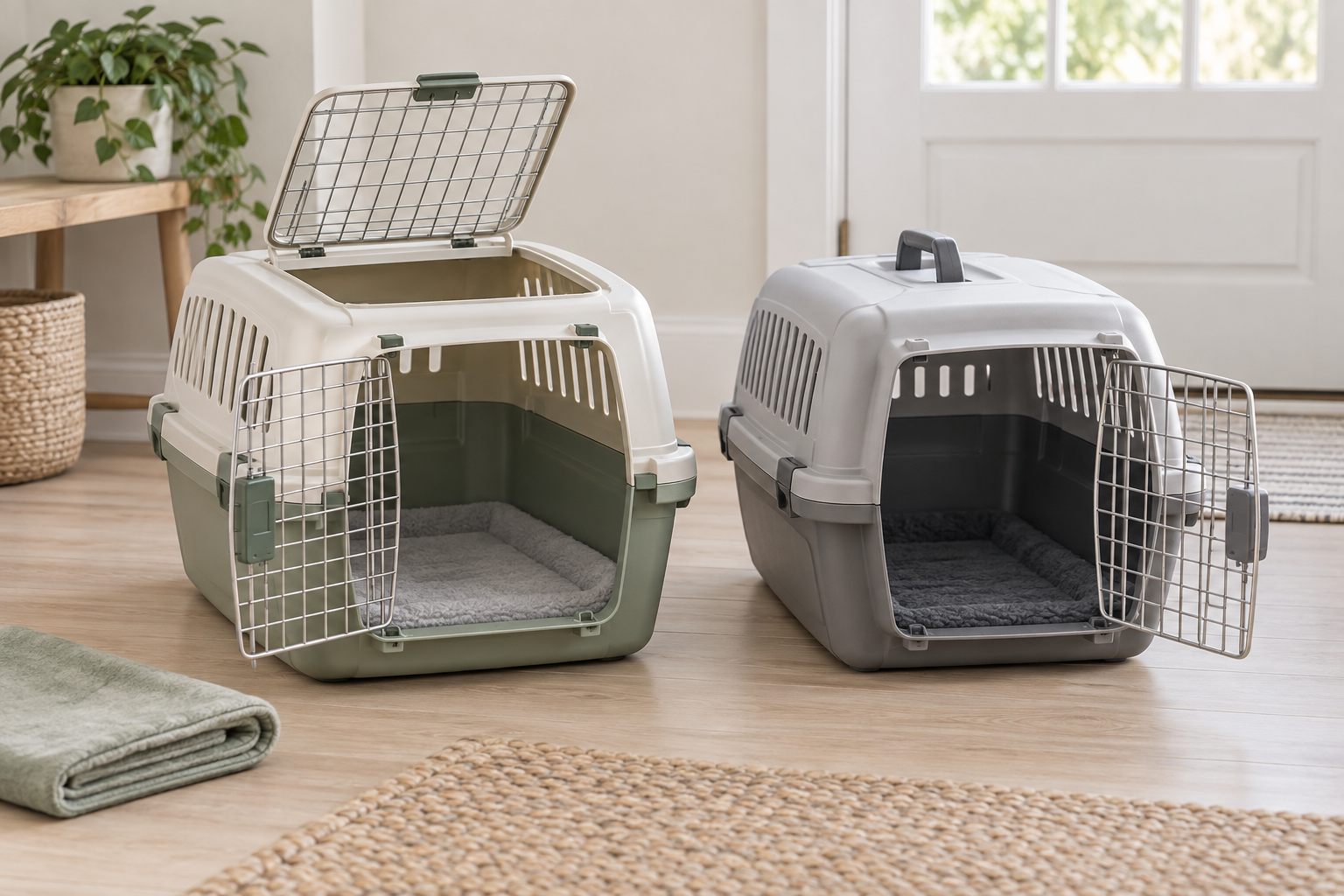 Soft-sided dual-opening format
This is a purchase and upgrade framework for routine appointments and short local trips. It is not an airline-approval, crash-safety, escape-proof, medical, or behavior-treatment claim. Fit, condition, ventilation, closures, base support, and a carry method you can manage matter more than door position.
Quick Answer
Top access may be worth it when the clear opening is large enough for your pet, the lid opens fully where you use it, and reaching from above gives you or the veterinary team a genuinely useful second route.
It is probably not worth it when your intact, properly sized front-access carrier already works, overhead clearance is tight, or the extra hinges and latches add inspection work without solving a specific constraint.
Audit the Carrier You Already Have First
Start with condition. Replace a carrier with cracked plastic, sharp edges, torn mesh, spreading seam damage, unreliable zippers or latches, loose shell fasteners, or a flexing base. A top door should not distract from damage elsewhere.
Next, follow the maker's sizing directions and compare your pet's normal standing height and body length with the usable interior. Measure the clear front opening, then describe the exact difficulty a top opening would solve. If the answer is only “it might be nicer,” delay the purchase until you can identify a repeatable benefit.
When Top Access Can Earn the Upgrade
- The front frame is the constraint: the whole carrier fits, but the measured front doorway makes appropriate placement or access awkward.
- Your clinic prefers another access route: staff have suggested a carrier that lets them reach the pet from above during routine handling.
- You have usable overhead room: the lid can open completely at home and at the destination without hitting a shelf, wall, or vehicle roof.
- You can manage every closure: you are comfortable checking the top door, front door, shell fasteners, and secondary catches before each lift.
These are fit and workflow reasons, not promises that a pet will enter willingly or feel less distressed.
When to Keep the Current Carrier or Choose Front Access
Keep a sound front-load carrier when the interior and doorway fit, the pet can use it without unsafe handling, and you can clean, lift, and store it comfortably. A new carrier duplicates a working tool if the second opening will rarely be used.
Skip top loading when you lack overhead clearance, cannot support the combined carrier-and-pet weight, find multiple latches difficult to verify, or need a carrier for a trip governed by specific transport rules. Confirm current requirements directly with the carrier maker and transport provider rather than assuming an opening style is accepted.
Check the Whole Carrier, Not Just the Top Door
- Opening and interior dimensions: use clear usable measurements, not the outside footprint or weight label alone.
- Door hardware: operate hinges and latches while the carrier is empty and stationary; check that bedding, paws, tail, tags, and fabric stay clear.
- Ventilation: make sure openings remain unobstructed with the carrier closed and any fitted liner in place.
- Base and handle: inspect base support and confirm the top mechanism does not interfere with a secure grip.
- Cleaning: look for maker directions for the shell, wire door, grooves, hinges, and removable pieces, then dry everything before storage.
- Storage: measure the space with the carrier assembled if the maker requires it, and keep all hardware easy to inspect.
When to Ask a Veterinarian or Qualified Professional
Call the veterinary team before transport when a pet is injured, painful, weak, having trouble breathing, unable to rest normally, or needs medical handling instructions. For severe fear, repeated escape attempts, aggression, or handling that could injure the pet or a person, ask the veterinary team and an appropriately qualified, reward-based behavior professional for a plan. Do not force repeated loading attempts or expect another door to solve a medical or behavior problem.
Bottom Line
A top-loading pet carrier is worth paying for only when the measured top opening solves a recurring access constraint and the whole carrier fits the pet, trip, cleaning routine, storage space, and your ability to inspect and carry it. Otherwise, keep a dependable carrier and spend nothing.
Next, use the top-load-versus-front-load comparison to examine both formats. If the issue is broader than access, use the carrier upgrade checklist.