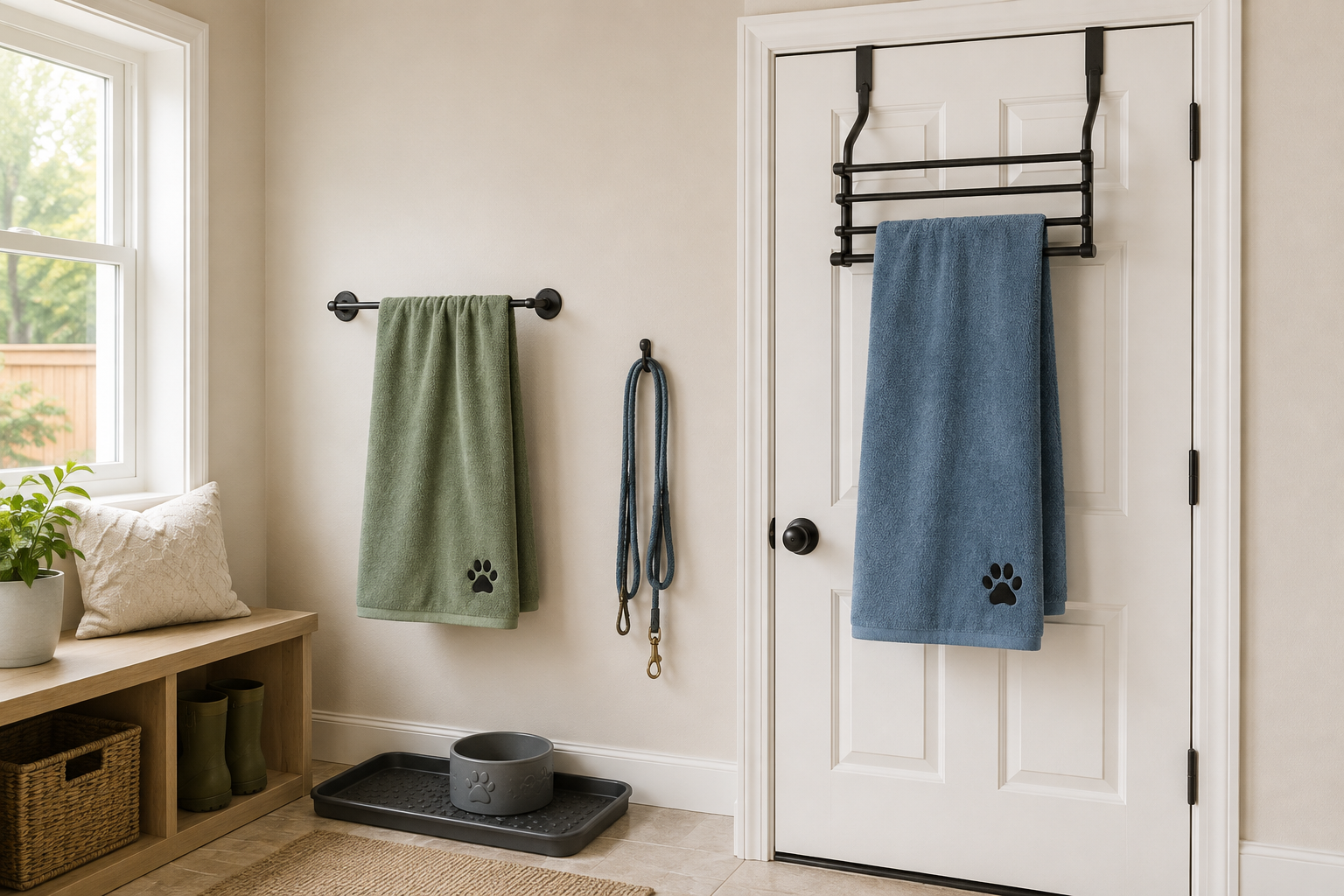
A rack is a storage and drying convenience, not an odor-control or sanitation solution. Towels still need laundering and complete drying on a schedule that matches their care labels and how soiled they become.
Quick Comparison
Choose wall-mounted when drilling is allowed, you have a suitable wall and fasteners, the position can stay permanent, and an open door would otherwise cover or strike the towels.
Choose over-door when you cannot alter the wall, the door has enough top and side clearance, and the loaded rack will not interfere with closing, handles, hinges, nearby walls, or the walking path.
Choose hooks rather than bars when you rotate several small paw towels and can leave space between them. A broad bar is usually better for spreading one larger damp towel.
Skip a dedicated rack if an existing bar already keeps towels separated and accessible, or if every possible location is within chewing reach or blocks safe door use.
Measure the Door Before Considering an Over-Door Rack
Measure the door's thickness, then check the gap between its top edge and frame as the door moves through its full swing. Compare both numbers with the maker's hook dimensions. Also measure the rack's projection on each side: towels and lower bars should not hit a wall, cabinet, shelf, or person using the doorway.
Test the location with the room in normal use. A door that closes while empty may rub or stop once rack pads, seams, and damp towels add thickness. Do not force a door, bend its hinges, remove fire-rated hardware, or modify a required exit route to make a rack fit. Renters should follow property rules even for a removable product.
Check the Wall Before Installing a Fixed Rack
A wall-mounted rack needs fasteners and installation steps suitable for the actual wall construction and the maker's stated load. Do not assume packaged screws or anchors suit drywall, plaster, masonry, tile, or a hollow door. Pipes, wiring, waterproofing, and rental restrictions may also rule out the preferred spot.
If the substrate or hidden services are uncertain, ask the property owner or a qualified installer. A towel rack should not carry a pet, child, bag, or leash bundle; place it where grabbing or climbing is unlikely and use it within its stated purpose and load guidance.
Drying Space Matters More Than the Number of Bars
A rack can advertise several bars yet leave little usable airflow once thick towels overlap. Compare bar length with unfolded towel width and the distance between bars with towel thickness. Count how many damp towels can hang mostly open, not how many can be folded onto the frame.
Keep wet towels from resting against finished wood, drywall, flooring, outlets, heaters, or items that should remain dry. Move heavily soaked towels directly to the laundry rather than leaving them to drip. The rack also needs routine wiping and full drying according to its finish-care instructions.
Daily Access and Pet Reach
The best location is close enough to use after a wet walk but not where a swinging door, low hook, or trailing towel creates a snagging or chewing opportunity. Consider the shortest person who needs the towels and the tallest pet that can reach them. Remove frayed towels and stop using a rack that loosens, bends, develops sharp edges, or damages its mounting surface.
An over-door rack can shift or make noise each time the door moves. Padding may reduce contact, but check it regularly rather than assuming it protects every finish. A fixed rack avoids door movement but can still loosen if overloaded or installed on an unsuitable surface.
Cleaning, Laundry, and Capacity
Plan around the real laundry cycle. One large towel after occasional rain needs less capacity than several paw towels used daily. A second clean set is often more useful than crowding damp towels on extra hooks. Keep visibly soiled towels separate from clean supplies and launder them according to their labels.
If towels wait for a scheduled wash, a ventilated hamper can hold dry or nearly dry used items away from clean stock. The pet towel hamper guide explains temporary laundry holding versus open drying; a hamper should not substitute for spreading out a saturated towel.
Who Should Skip Either Rack?
Skip an over-door rack if the door binds, the hooks do not match its thickness, the frame clearance is tight, or the rack collides with nearby surfaces. Skip wall mounting when permission, wall construction, appropriate hardware, or a safe drilling location cannot be confirmed. Skip both if towels would remain bunched, drip onto a sensitive surface, obstruct a route, or invite a pet to pull them down.
Bottom Line
A wall-mounted rack is the steadier choice when you can install it correctly and want one permanent drying zone. An over-door rack earns its flexibility when exact door measurements, full movement, and loaded clearance all work. Choose by room geometry and the number of towels you can spread out—not by the highest advertised hook count.
For the complete wet-walk routine, continue with the pet doorway cleanup station guide and browse the cleanup and odor-control pillar.