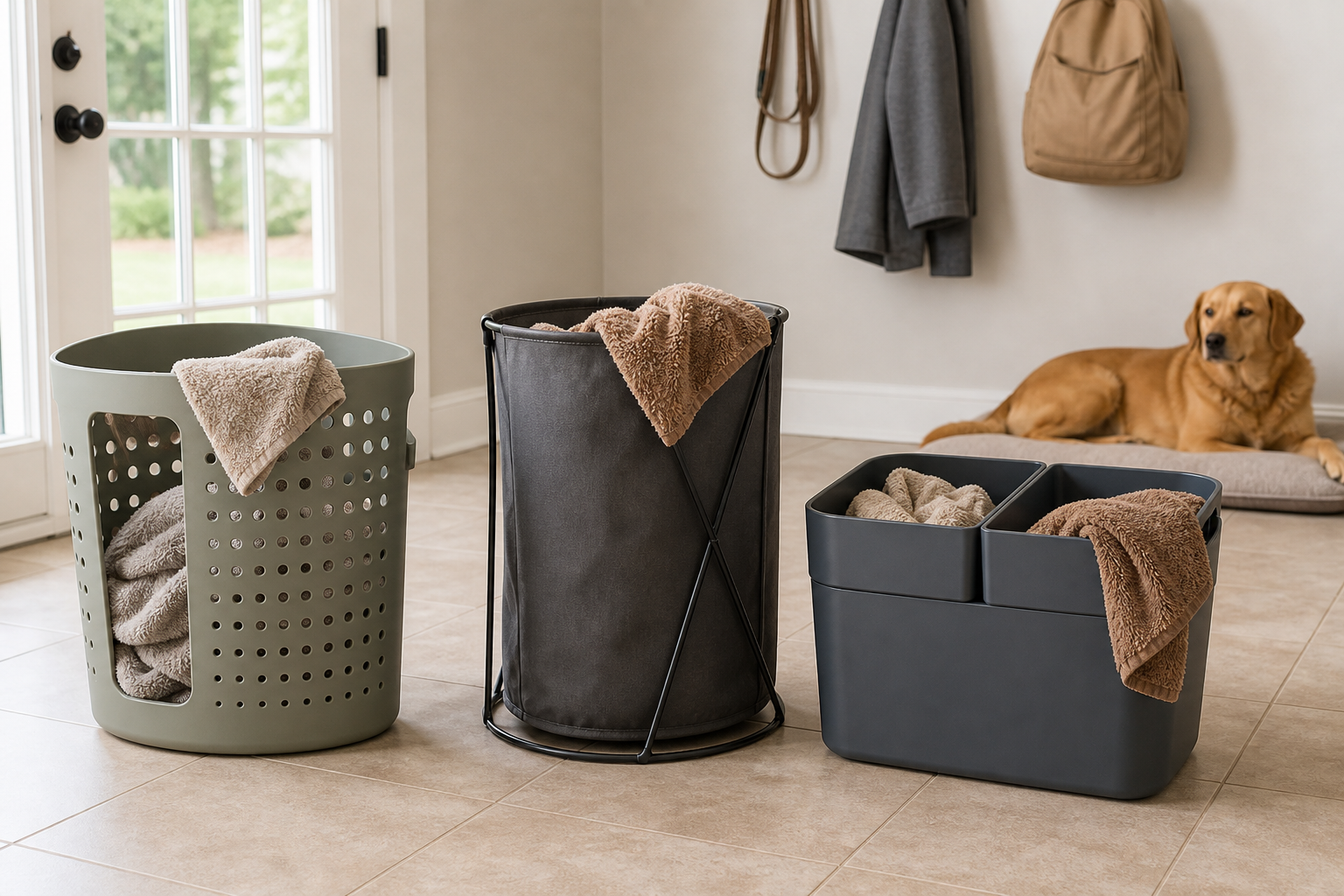
A hamper does not sanitize towels or prevent odor, mildew, or skin problems. Do not seal wet towels in a container and wait for the hamper design to solve the moisture. Follow textile labels, laundry-product directions, and the container maker's care instructions. Contact a licensed veterinarian when towels are connected to persistent skin irritation, wounds, discharge, or another health concern.
Quick Picks by Mudroom Routine
Choose a ventilated rigid hamper when you want a structured footprint, visible openings, and a body you can clean according to its label. Choose a framed washable bag when carrying a removable liner to the washer matters more than rigid sides. Choose a divided basket when two categories of already-aired towels genuinely follow different laundry paths. Skip a new hamper when an existing cleanable basket fits or towels normally go straight to laundry.
Start With the Damp-Towel Step
Hamper shopping begins after the wettest part of the routine. Decide where a used towel can hang open or lie flat without blocking the door, touching food, or becoming a chew target. Only move it to storage when that matches its care instructions and your laundry timing.
Ventilation holes make the load easier to inspect and expose more of the contents to room air, but they are not a guarantee about drying or odor. A lid may hide clutter while also reducing visibility and adding clearance. Treat both as workflow features rather than health claims.
Measure Capacity in Towels, Not Just Liters
- Collect the largest normal set of paw cloths, bath towels, and washable entry mats used between loads.
- Fold or loosely stack them the way you would after airing.
- Measure the stack's width, depth, and height.
- Tape the proposed hamper footprint on the floor, including lid, liner-removal, bench, and door clearance.
- Carry a similarly sized basket along the full route to the washer.
Exterior capacity labels do not show whether broad towels fit the opening, whether a divider steals useful width, or whether a full bag is manageable. Current product dimensions and a household trial answer those questions better.
Ventilated Rigid Hamper: Structured and Easy to Inspect
A rigid basket stays open while you load it and can make the fill level obvious. Compare opening size with folded towels, check for smooth finished edges, and inspect the base and handles. Deep perforations and molded corners still need cleaning; confirm how the maker says to wash and dry the entire body.
This format can be awkward on stairs or in a narrow laundry route. Skip it when the footprint crowds the entry, the handles are uncomfortable at the expected load, or an interested pet can reach and pull out the towels.
Framed Washable Bag: Portable, With More Parts to Check
A removable bag can simplify the trip to laundry when its handles, seams, and attachment points suit the expected load. Check whether the bag is actually removable, how it is washed and dried, and whether the frame remains stable when the bag is lifted out.
Loose drawstrings, hanging loops, fabric edges, and exposed frame parts deserve a pet-access check. Do not store sharp grooming tools, cleaners, medication, or other restricted supplies in the bag just because it sits in the pet area.
Divided Basket: Useful Only When Separation Has a Job
A divider earns its space when two groups really need different handling—for example, small dry paw cloths and larger already-aired bath towels headed to different loads. Measure each compartment separately; the total capacity can conceal two narrow spaces that do not fit the household's towels.
Skip the divider when everything is washed together. It adds corners to clean, can make the load unbalanced to carry, and may reduce usable space without improving the routine.
Cleaning, Carrying, and Replacement Checks
- Body and base: Follow instructions for the plastic, fabric, coating, or frame; reach corners and the underside.
- Liner: Verify whether it is removable and machine washable rather than assuming.
- Drying: Let every cleaned part dry as directed before reassembly or storage.
- Handles: Check attachment points and test the normal filled load without overloading it.
- Condition: Stop using a hamper with sharp cracks, exposed wire, unstable supports, failing seams, loose hardware, or damaged handles.
Who Should Skip a Dedicated Mudroom Hamper?
Skip one if pet towels are washed promptly, an existing washable basket works, the only location blocks a walkway, or there is no workable place for the towels to air first. Also skip floor or fabric formats that a pet persistently tips, chews, paws, or empties. A wall hook or rack may fit the airing stage better, but mounting and clearance need their own checks.
Connect the Rest of the Cleanup Routine
A hamper stores towels between steps; it does not replace the steps. Build the entry area with the doorway cleanup station guide, compare absorbent and waterproof door mats, or choose the towels themselves with the pet bath towel guide.
Bottom Line
Choose a ventilated rigid hamper for a structured, inspectable load; a framed washable bag for a removable carry path; or a divided basket only when separation changes the laundry routine. The best mudroom fit holds one measured load, stays out of the pet's reach when needed, can be cleaned and dried as directed, and never substitutes for airing or laundering damp towels promptly.