
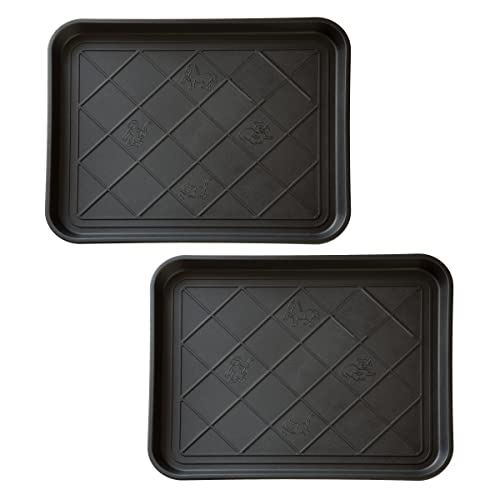
 Stalwart All-Weather Boot Tray
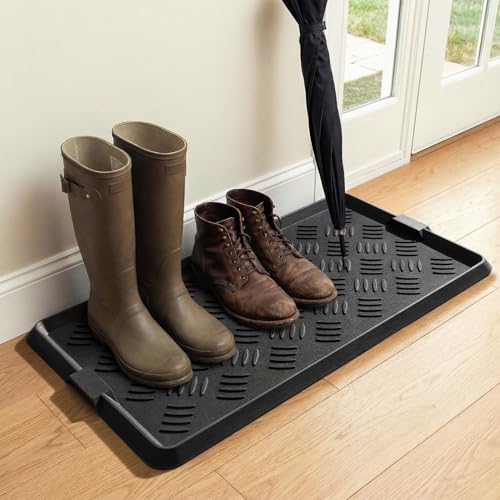 tchdio Rubber Boot Tray
This guide compares product formats, published dimensions, materials, and routine fit. It is not based on a claim that we personally tested every tray, and a boot tray is a convenience item—not a grooming, training, or health solution.
Best Fit by Entryway
Best for a wider drop zone: WeatherTech BootTray
Choose the WeatherTech when 36 inches of clear wall or floor space is available and several people or one very muddy walking routine share the doorway. The extra length gives shoes, a paw towel, and a small closed wipe container separate landing spots. It is too large when it narrows the walking path or catches the door.
Best for easy carrying: Stalwart All-Weather Boot Tray
A hard plastic tray is useful when the whole tray will be lifted and rinsed frequently. Check that it can be carried while wet without flexing more than you are comfortable handling. A lightweight tray still needs a stable, level location where pets and people will not step on its edge.
Best for a shorter doorway: tchdio Rubber Boot Tray
The shorter rubber format makes sense when width is the limiting measurement and extra floor grip matters. Rubber can still hold moisture underneath, so lift the tray, dry both surfaces, and follow the flooring maker's care guidance rather than leaving it down indefinitely.
Selection Criteria That Matter
- Usable dimensions: Measure wall-to-door clearance, walking space, baseboards, and any nearby vent—not just the empty-looking floor.
- Raised edge: An edge should contain ordinary drips without becoming a toe-catching obstacle.
- Material: Rubber may grip better; rigid plastic is often lighter to carry. Either needs product-specific cleaning care.
- Rinse and dry routine: Make sure the tray fits the sink, tub, or outdoor cleaning area and can air-dry fully.
- Floor contact: Grit and trapped moisture can mark some floors. Lift and clean underneath regularly.
- Pet access: Store wipes, cleaners, waste bags, and anything chewable in a closed caddy or wall storage—not loose on the tray.
- Capacity: Count the shoes and cleanup supplies that are genuinely present after one normal walk.
A Simple Comparison Framework
- Frequent rain and several pairs of shoes: Start with a longer raised-edge tray.
- Small apartment doorway: Prioritize exact door clearance and a shorter tray over maximum capacity.
- Tray goes to the sink after most walks: Choose a size and material you can lift comfortably when wet.
- Mostly dry dirt and fur: A washable entryway rug may be easier and less visually bulky.
- Water pools after every outing: Empty and dry the tray promptly; it is containment, not drainage.
Where Leash Storage Fits
Keep leash storage above or beside the tray rather than in it. A wall hook, closed caddy, or shelf keeps hardware and fabric away from standing water while leaving the tray free for wet footwear and the towel currently in use. Let a damp leash or harness dry according to its care instructions before putting it in closed storage.
For towels, wipes, waste bags, and brushes, follow the product zones in our doorway cleanup station guide. The boot tray is the wet zone; it should not hold every walking supply.
Who Should Skip a Boot Tray
Skip a rigid tray when it would obstruct an exterior door, narrow an evacuation path, cover a floor vent, or create a trip point. A washable low-profile rug may fit better in a very tight entryway. Renters should also check floor-care instructions before leaving rubber or plastic against finished flooring.
Skip open tray storage for cleaners, fragranced products, wipes, or small items a pet may lick or chew. If paw handling causes pain, limping, bleeding, marked fear, or a sudden behavior change, stop the cleanup attempt and contact a licensed veterinarian or qualified behavior professional as appropriate.
The Bottom Line
The WeatherTech BootTray is the strongest starting point for a full-width wet zone. Choose the lighter Stalwart format when frequent carrying matters, or the shorter tchdio rubber tray when doorway width is tight. The right tray is the one that clears the door, contains an ordinary walk's mess, rinses without fuss, and leaves leash storage dry and separate.