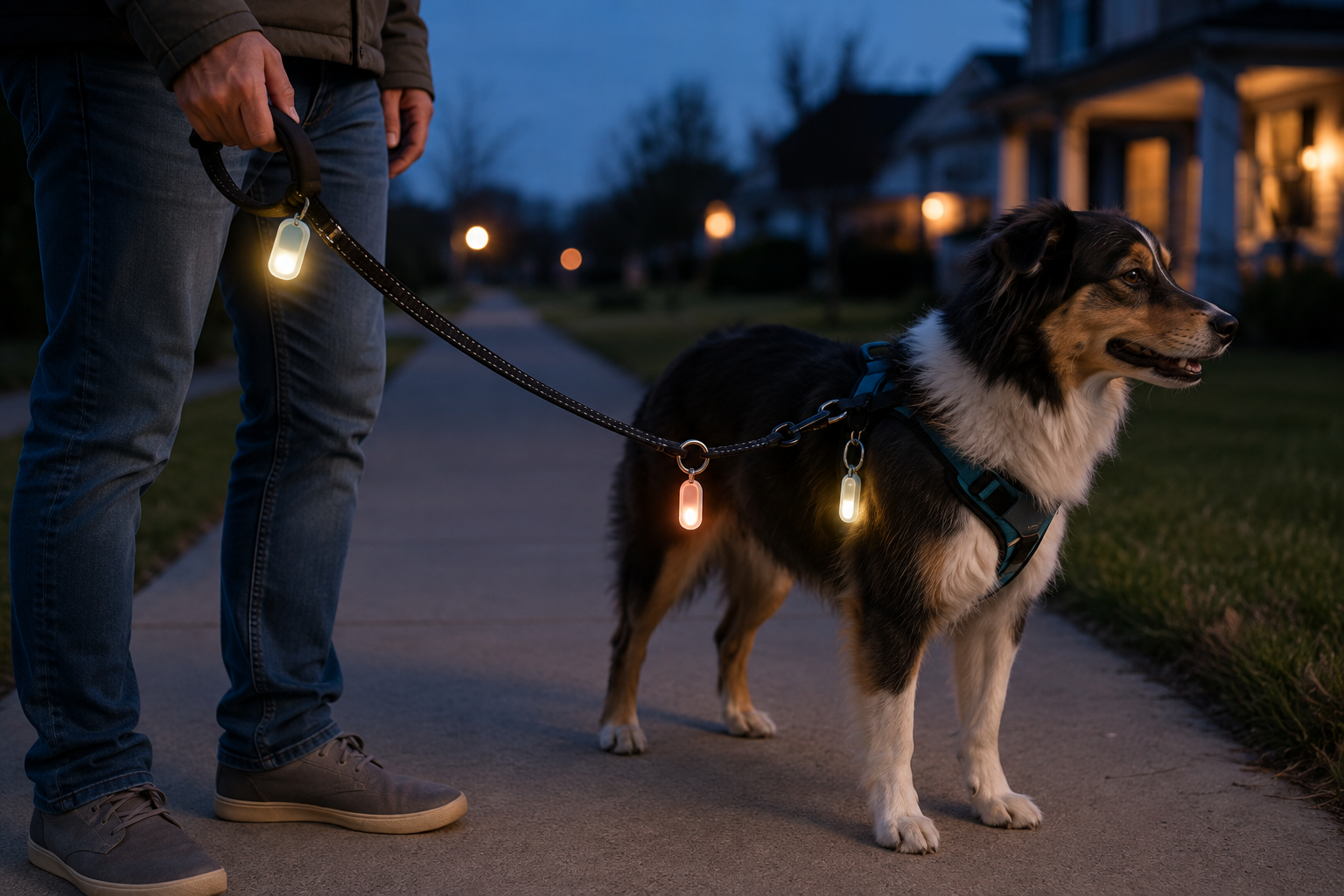
A small light is a visibility aid, not a safety guarantee and not a substitute for an owner-carried light when the route itself needs illumination. Brightness, runtime, and weather resistance vary by current product; use only maker-documented claims and keep a backup plan.
Quick Picks by Attachment
Choose a flat clip when a broad handle or ring accepts the clip without crowding your grip. Choose a silicone loop when its documented circumference and closure fit a stable ring and stay out of chewing reach. Choose a carabiner-style light when transfer between compatible setups matters and the gate stays closed during ordinary movement. Skip a pet-mounted light when it swings, distracts the dog, creates a snag point, or makes leash handling less predictable.
Check the Attachment Point First
- Opening and ring size: compare the clip or loop dimensions with the actual hardware rather than relying on a lifestyle photo.
- Position: keep controls reachable without placing the device where it hits the dog's body, face, or moving legs.
- Retention: test the attachment indoors by moving the leash through its normal range, then check it again after each walk.
- Handling: do not crowd the leash grip, interfere with a clip, or attach anything to a load-bearing connection unless the equipment maker permits it.
- Pet access: batteries and small devices must stay out of chewing and swallowing reach.
Compare Power and Controls
A rechargeable light avoids disposable battery changes but adds a charging routine and port inspection. A replaceable-battery model requires the correct cell, a secure compartment, and storage that keeps batteries away from pets and children. Read the maker's stated runtime by mode, charge before leaving, and do not treat the maximum claim as a guaranteed walk length.
Buttons should be usable with ordinary gloves if that matters to your routine, but not so exposed that the light changes modes whenever it brushes the leash. Flashing modes can be distracting to pets and people; select a setting appropriate to the route and stop if the dog appears bothered.
Weather Labels Need Exact Reading
“Water resistant” does not automatically mean suitable for heavy rain, puddles, washing, or immersion. Find the current maker-stated rating and directions, keep charging ports closed as instructed, and dry the device before charging. Stop using a light with a cracked case, damaged seal, corroded contacts, swollen battery, unusual heat, or unreliable switch.
Keep a Layered Low-Light Routine
Reflective material returns light that reaches it, while a powered accessory emits light and needs energy. Either can be useful, but neither makes a poor route, distracted handling, or worn walking hardware safe. Carry a separate light if you need to see the walking surface, choose a route you can manage, stay attentive around vehicles and path users, and follow local leash rules.
Start with the leash light vs reflective leash comparison if you have not chosen between active and passive visibility. For passive formats, use the reflective leash buying guide. To keep spare bags, a charged light, and cleanup supplies together, build a simple everyday outing kit.
Who Should Skip a Clip-On Light?
Skip one when no secure compatible attachment exists, the device changes your grip, the dog fixates on it, or a loose accessory can reach the mouth. An owner-carried light, reflective gear, a better-lit route, or a different walk time may be simpler. For lunging, bolting, severe fear, or handling concerns, seek individual help from a qualified trainer or behavior professional; contact a licensed veterinarian about pain, breathing trouble, sudden behavior change, or other health concerns.
Bottom Line
A rechargeable flat clip is a practical starting format for a broad compatible handle or ring. A silicone loop favors flexible attachment, while a carabiner-style light favors easy transfer. The right choice stays secured, light, reachable, charged, and within its documented weather limits—and remains only one layer of an attentive evening-walk routine.