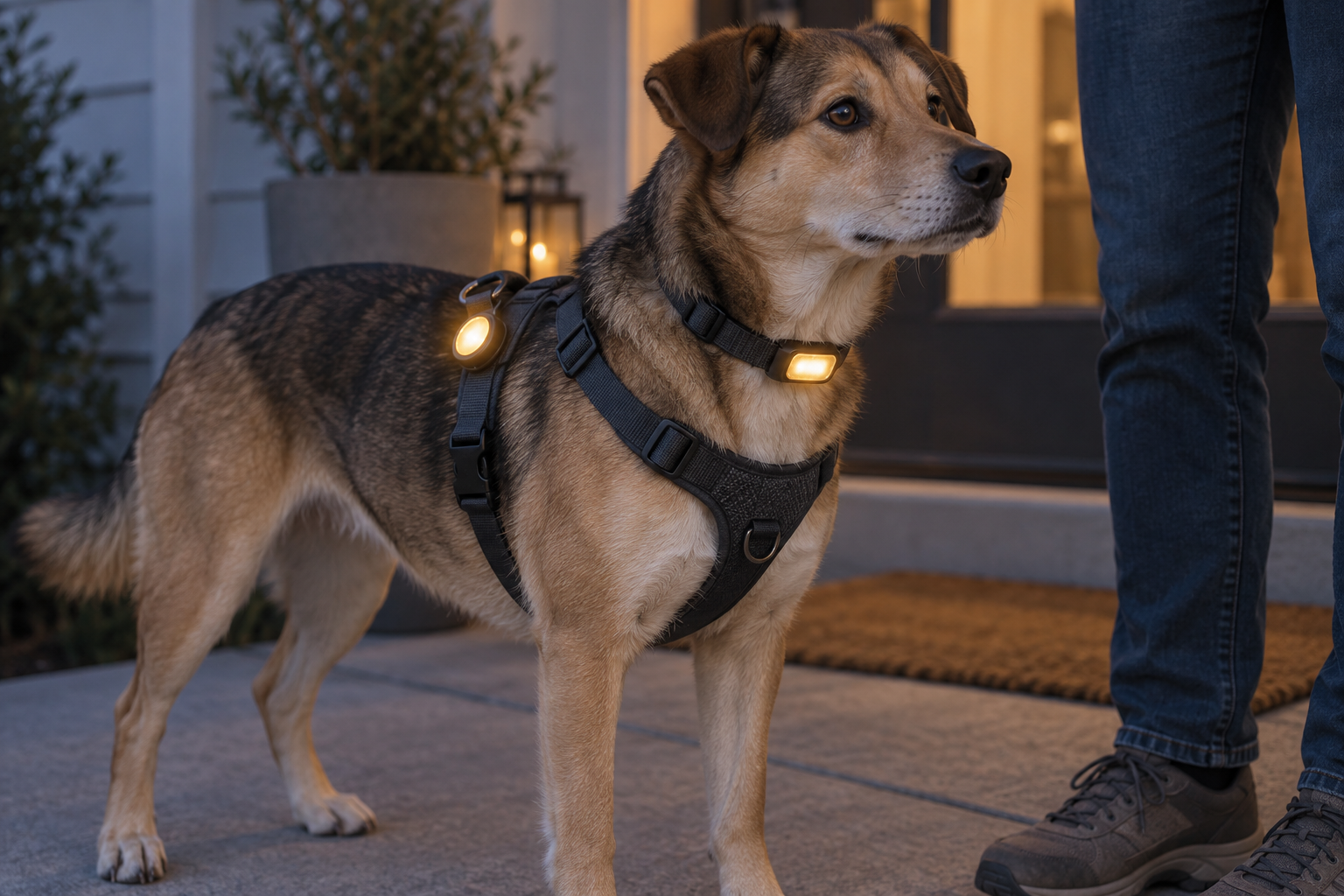
Visibility lights are optional aids, not substitutes for an appropriate route, sound leash hardware, attentive handling, or a separate human-directed light when you need to see the ground. Do not aim a bright or flashing light toward a dog's eyes.
Quick Decision
- Choose a clip-on light when you have a secure maker-permitted attachment point away from your hand, the leash snap, and chewing reach.
- Choose a collar-mounted light when its weight and shape suit the collar and it does not alter fit, press into the neck, or crowd identification tags.
- Skip both for now if the dog mouths accessories, the attachment shifts, controls are unreliable, or the device interferes with walking equipment.
- Use another position when a handler-worn or bag-mounted light better fits the routine without adding weight to the dog.
Attachment and Movement
A clip-on light can be moved among compatible locations, which is useful if the same device serves a harness, leash ring, or walking bag. That flexibility also creates more variables: the clip must close fully, the device must not swing into the dog or handler, and it must stay clear of buckles, adjustment points, and the leash connection. Test the setup indoors while the dog stands, walks, turns, and lies down.
A collar-mounted light travels with the dog's head and neck. Its viewing angle can change when the dog turns, lowers its head, or has long fur around the collar. Check the maker's attachment directions and confirm that the mount neither tightens the collar nor sits where it can rub. Recheck collar fit after installation rather than assuming the added device changes nothing.
Weight, Profile, and Pet Tolerance
Compare actual device dimensions and weight from the current listing. A small difference may matter on a narrow or lightweight collar, while a larger harness strap may carry a clip without placing it at the neck. There is no universal weight cutoff: suitability depends on the equipment, attachment method, dog, and maker instructions.
Watch for scratching, freezing, repeated head shaking, rubbing, or attempts to mouth the device. Remove it if it changes the dog's normal movement or comfort. A powered light is a convenience and visibility layer, not a reason to make a dog tolerate distracting gear.
Controls, Power, and Charging
Check whether the button can be used without removing the device and whether normal movement could press it accidentally. Review the current maker-stated modes, charging method or battery type, runtime guidance, storage directions, and indicator behavior. Runtime claims are planning inputs, not guarantees across every setting, temperature, or battery age.
Charge or replace batteries before the walk, test the light before leaving, and keep a separate backup when darkness would make the route hard to manage. Secure loose charging pieces and small batteries away from pets and children, and follow the maker's disposal directions.
Weather Labels and Cleaning
Read the exact weather-resistance label instead of assuming that a glowing outdoor accessory can handle rain or immersion. Water-resistant and waterproof are not interchangeable. Follow current instructions for port covers, wet-weather use, wiping, drying, charging, and storage. Inspect the clip, mount, housing, seams, and collar or harness before each use.
Who Should Skip a Clip-On Light?
Skip this format when every available clip point swings, opens, blocks the leash connection, crowds your grip, or hangs within chewing reach. It can also be a poor fit when the device repeatedly rotates under thick fur or strikes hard hardware as the dog moves.
Who Should Skip a Collar-Mounted Light?
Skip it when the device is bulky for the collar, changes collar fit, presses against the neck, crowds tags, or distracts the dog. A collar light is also the wrong place when the maker does not explicitly support the collar width, material, or mounting method you use.
Red Flags Before Buying
- No device dimensions, weight, attachment limits, power details, care directions, or weather label are provided.
- The listing promises accident prevention, universal visibility, or guaranteed safety.
- The mount appears to depend on stretching, pinching, or modifying the collar, harness, or leash contrary to its maker's directions.
- The light can shine toward the dog's eyes, open during routine handling, expose a charging port, or release a small battery.
- The accessory encourages using a route or time that you otherwise could not manage safely.
Build the Rest of the Walking Setup
For the broader choice between active and passive gear, use the leash light versus reflective leash guide. The clip-on light buying guide covers attachment styles in more detail, while the walking and outing hub connects leash, harness, water, cleanup, and carry-gear decisions.
If a dog suddenly resists the collar or harness, seems painful, panics, or behaves in a way you cannot safely manage, remove the accessory and contact a veterinarian or qualified behavior professional as appropriate.
Bottom Line
A clip-on light offers more placement flexibility but asks you to manage swing, snag exposure, and hardware clearance. A collar-mounted light keeps the device with the dog but makes low weight, profile, collar fit, and tolerance especially important. Choose the position that stays secure and comfortable in your actual setup, and treat the light as one maintained visibility aid—not a safety guarantee.