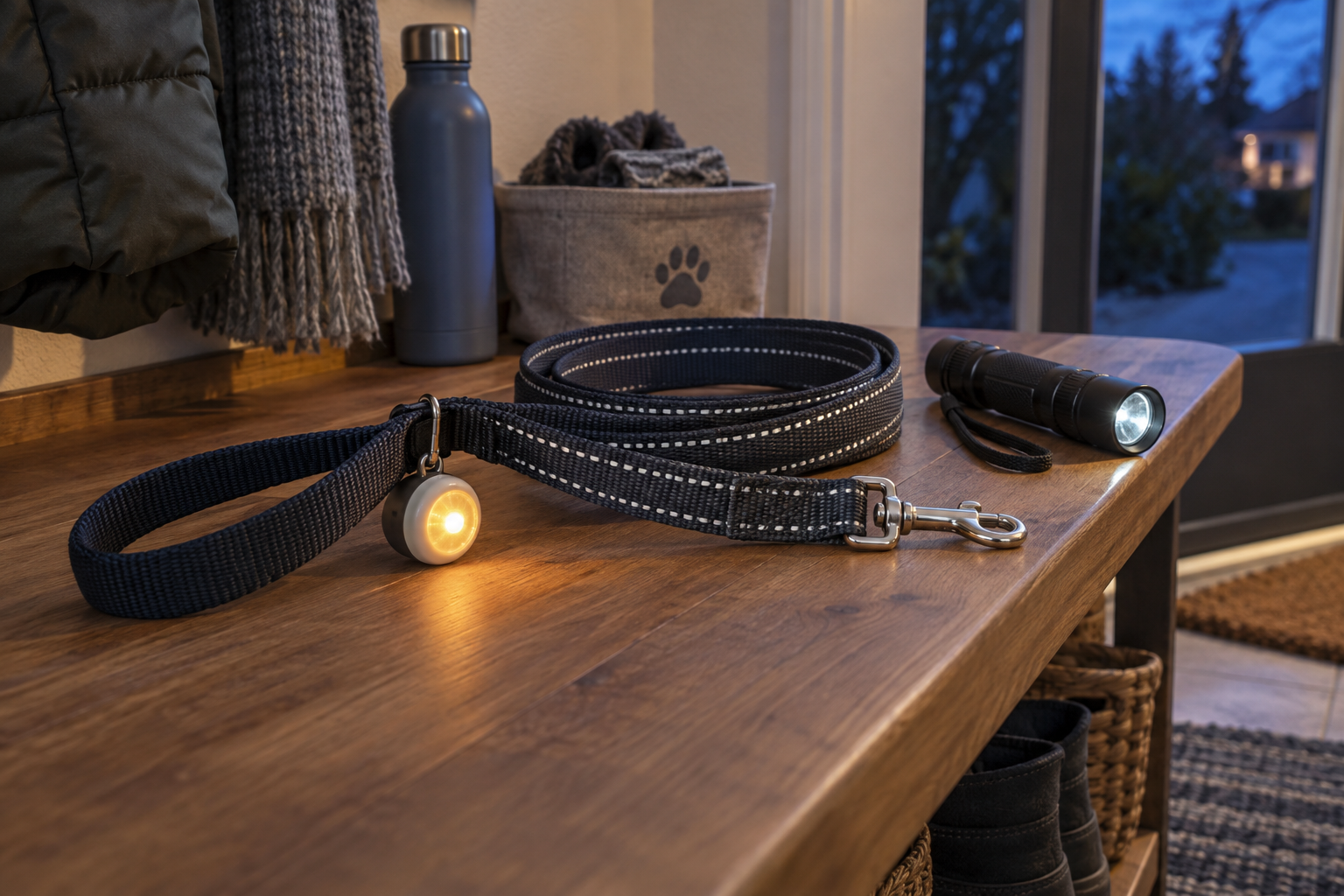
A dog-worn or leash-mounted light is a convenience layer, not protective equipment and not a substitute for attentive handling, suitable walking hardware, local rules, or choosing a route you can manage. Use an owner-directed light when you need to see the ground; do not aim bright or flashing light toward a dog's eyes.
Quick Decision: Buy, Combine, or Skip
- Buy a powered light when low-light walks are frequent, a maker-permitted attachment is secure, and charging or battery checks can join the routine.
- Combine powered and reflective gear when each provides a useful, different visibility layer without interfering with leash handling or comfort.
- Use reflective gear and a flashlight when you already own suitable equipment and can manage the route without another dog-mounted device.
- Skip or delay when the dog mouths accessories, the light swings or shifts, current specifications are unclear, or maintenance is likely to be missed.
The Six-Part Worth-It Test
- Actual timing: How often do walks begin or end in low light rather than full daylight?
- Route need: Are you trying to make the walking setup more noticeable, illuminate the path for yourself, or both?
- Attachment: Is there a documented compatible point away from the leash connection, your grip, and chewing reach?
- Pet tolerance: Does the device stay light, low-profile, and unobtrusive through normal movement?
- Upkeep: Will you test the light, charge it or replace batteries, inspect the mount, and store small parts securely?
- Backup: Can the walk remain manageable if the accessory stops working?
Start With the Problem the Light Cannot Solve
A small emitted light can help mark a location, but it does not light uneven ground like a directed flashlight and cannot control where another person is looking. Reflective material only returns light that reaches it. Write down the actual route, lighting, traffic or shared-path conditions, and what you need to see before choosing gear.
If the route feels unmanageable without a new accessory, change the time or route first. A visibility light should support an already workable routine, not justify a walk that otherwise feels unsafe.
Attachment, Weight, and Dog Comfort
Measure the proposed ring or webbing and compare it with the maker's clip or loop dimensions. The device should not block the primary leash connection, change collar fit, strike the dog, shine toward the eyes, or hang where it can be mouthed. Test the complete setup indoors while the dog stands, turns, walks, and lies down.
There is no universal acceptable device weight. Check the current product dimensions and weight against the collar, harness, or leash and watch the individual dog's response. Remove the accessory if you see scratching, repeated head shaking, freezing, rubbing, or attempts to chew it.
Power and Maintenance Are Part of the Price
Review the current maker-stated power source, modes, runtime guidance, charging connection or battery access, indicator behavior, and storage directions. Runtime statements are planning information, not guarantees across every mode, temperature, charge cycle, or battery age.
Test the light before leaving rather than discovering a flat battery outside. Store button cells, loose batteries, caps, and charging pieces away from pets and children, and follow manufacturer and local disposal guidance. If the maintenance does not fit your routine, passive reflective gear may be the more realistic choice.
Weather Labels, Cleaning, and Inspection
Read the exact current weather label. Water-resistant and waterproof are not interchangeable, and neither term tells you what to do with an open charging port or a wet device. Follow the maker's directions for rain exposure, port covers, wiping, drying, charging, and storage.
Before each use, inspect the clip or loop, housing, controls, seams, and the walking equipment supporting it. Stop using a cracked, loose, hot, swollen, leaking, or otherwise damaged device and follow the maker's handling guidance.
When Reflective Gear and a Flashlight Are Enough
You may not need a powered dog light when walks rarely happen in low light, suitable reflective equipment is already part of the setup, and a handheld or body-worn light lets you manage the path. This simpler combination still requires inspection and attentive use, but it avoids another dog-mounted object and charging task.
The choice is not strictly either-or. Compare a leash light and reflective leash if you need the difference between emitted and reflected light. When you want a powered accessory, the clip-on versus collar-mounted guide helps choose its location.
Who Should Skip a Dog Visibility Light?
Skip it when no compatible attachment stays secure, the device crowds tags or leash hardware, the dog cannot comfortably ignore it, or the listing omits dimensions, weight, power details, care directions, and a clear weather label. Also skip products that promise accident prevention, guaranteed visibility, or universal safety.
A sudden new reluctance to wear a collar or harness, signs of pain, panic, or behavior you cannot safely manage are not shopping problems. Remove the accessory and contact a veterinarian or qualified behavior professional as appropriate.
Bottom Line
A dog visibility light is worth it when low-light walks are routine and a secure, comfortable, maintained powered layer solves a specific visibility need. Combine it with reflective gear or an owner-carried light when those tools have distinct jobs, and skip the purchase when existing equipment already supports the route or the extra upkeep will not happen.
Once the buy-or-skip decision is made, compare clip-on visibility light formats by attachment, weight, controls, power, weather label, and inspection. Browse the walking and outing guide hub for leash, harness, carry, cleanup, and travel decisions.