If a cord is frayed, pinched, hot, wet where it should be dry, or otherwise damaged, unplug the setup when it is safe to do so and follow the product maker's instructions; an organizer must never conceal the problem. For outlet questions, damaged wiring, or a location near water that you cannot assess confidently, use a qualified electrician. Contact a veterinarian if a pet has chewed electrical equipment or may have been shocked.
Choose the Route Before the Organizer
Read the fountain manual and inspect the proposed location first. The cord should not cross a walkway, run under a rug, sit where water routinely collects, or require a tight pull to reach. Keep the fountain stable and preserve any drip-loop, clearance, adapter, or outlet instructions supplied by the manufacturer.
Measure cord diameter, the length that genuinely needs guiding, every turn, and the space needed to unplug and move the fountain for cleaning. An organizer that makes routine removal annoying will probably be bypassed or left dirty.
Low-Profile Clips: Best for a Short, Visible Route
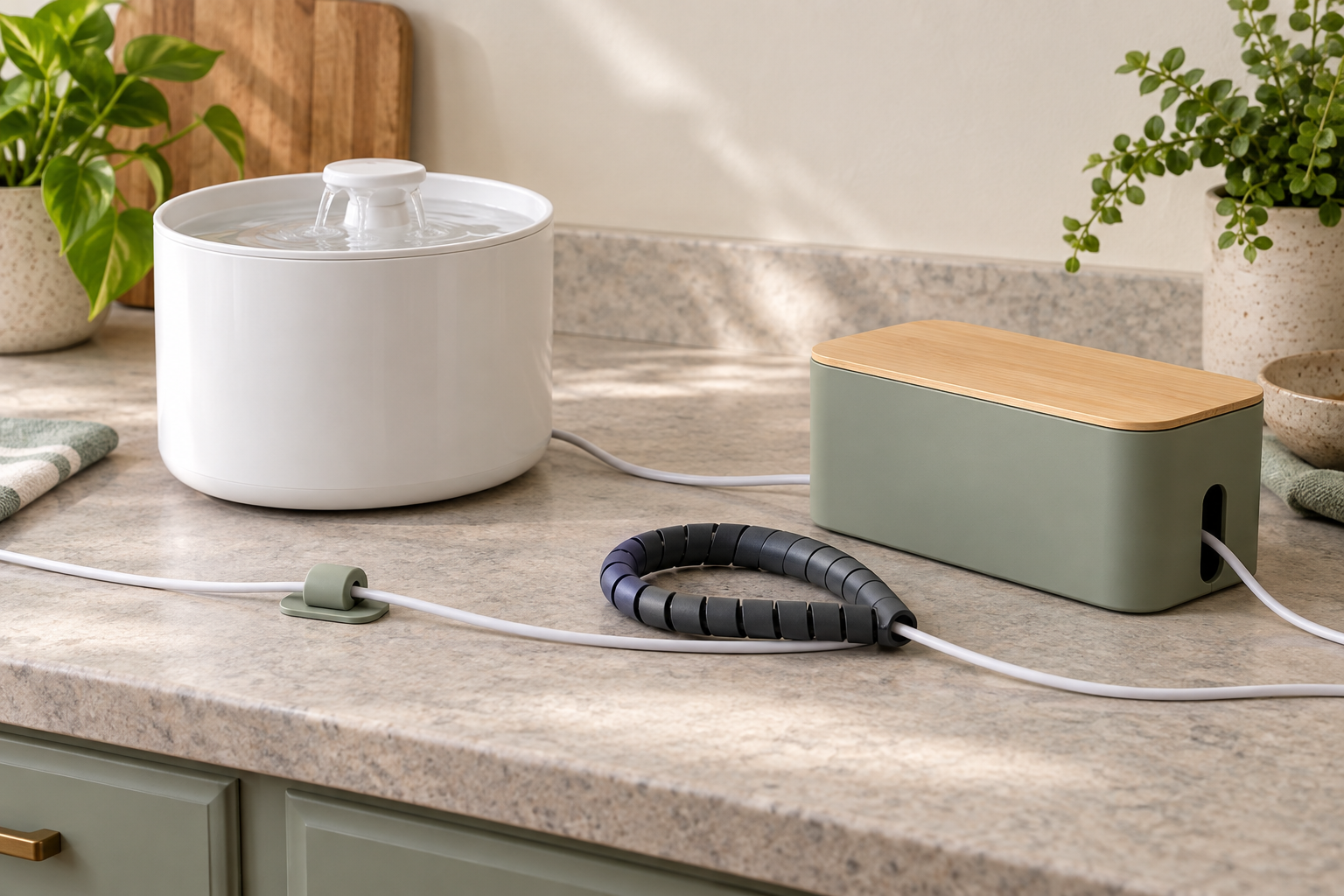
Individual clips use little space and keep most of the cord visible. Compare the listed cord range with the fountain cord, check whether the chosen surface is approved, and follow preparation, cure-time, loading, and removal directions. A clip should not crush the jacket or force a sharp bend.
Skip adhesive clips on unsuitable, delicate, damp, textured, or frequently washed surfaces. Also skip them when removing the fountain would require prying the cord out of many tight clips each time.
Flexible Sleeves: Best When Removability Matters
A sleeve can gather a reachable length while remaining removable, depending on its closure. Compare the sleeve's usable diameter and minimum bend, inspect its cut ends, and make sure the cord remains accessible for regular checks. Follow care directions and let every cleaned part dry fully before reassembly.
A sleeve is not chew-proof and should not be presented as protection from an interested pet. Skip it when the pet mouths cords or sleeves, when the covering would hide a connection, or when it prevents the fountain from being disconnected and cleaned promptly.
Cable Boxes: Best Only for an Approved Connection Area
A lidded box needs more scrutiny because it hides equipment. Measure plugs and adapters individually and together, including bend clearance at each opening. Confirm the box maker permits the intended equipment and follow all ventilation, loading, placement, and access instructions.
Do not assume a box is waterproof, childproof, pet-proof, ventilated enough for any adapter, or suitable beside a water source. Skip it if it encourages extra cord coils, conceals heat or damage, crowds the connection, or sits where spills occur.
Cleaning and Inspection Checklist
- Before cleaning: unplug and disassemble the fountain as its maker directs.
- Every reset: inspect the visible cord, plug, adapter, clips, sleeve, and box for damage, residue, looseness, or sharp edges.
- Surfaces: use only approved cleaning methods; appearance does not prove washability or water resistance.
- Drying: allow the fountain area and organizer parts to dry as directed before reconnecting.
- Pet access: reroute or stop using the setup if a pet paws, chews, pulls, or repeatedly investigates it.
Who Should Skip a Cord Organizer?
Skip a new organizer when the existing short route is already dry, visible, out of traffic, easy to inspect, and consistent with the fountain instructions. A simple bowl may be the better setup when the only available fountain location creates cord tension, trip exposure, routine wetness, or persistent pet access. No organizer corrects a damaged cord or unsuitable outlet.
Build the Rest of the Fountain Routine
Use the easy-clean fountain checklist to assess pump access and placement, compare fountain cleaning brush varieties, and add a washable fountain mat only when it does not cover the cord or conflict with product directions.
Bottom Line
Choose low-profile clips for a short route on an approved surface, a removable sleeve for a reachable cord segment, or a cable box only when its documented use and dimensions fit the connection. Keep the route dry, visible enough to inspect, removable for cleaning, inaccessible to the pet, and subordinate to the fountain and electrical-equipment instructions.