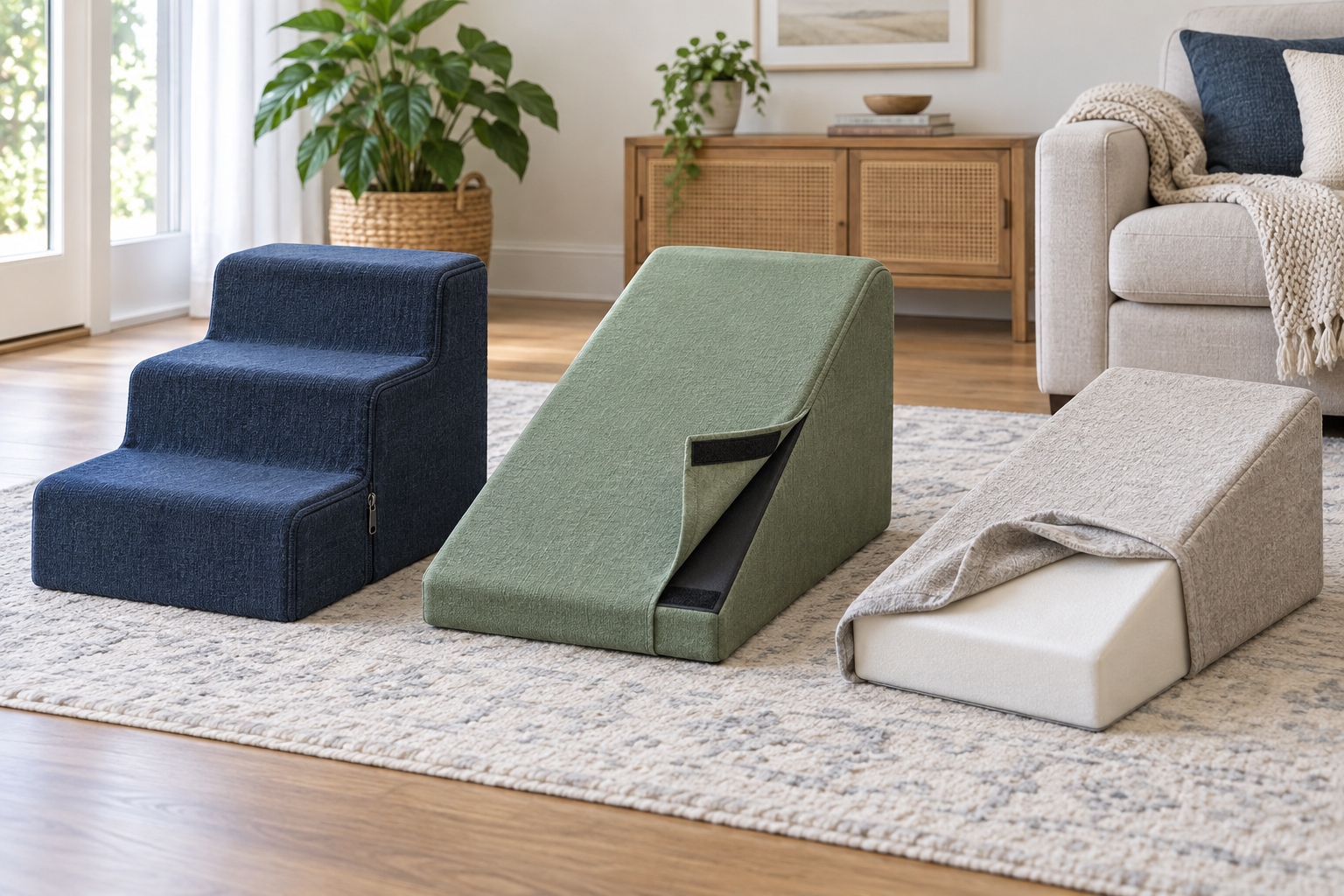
A replacement cover is a convenience layer, not a repair for compressed foam, a cracked frame, loose hardware, a shifting base, or a pet who is suddenly reluctant or unable to climb. If movement has changed, or using steps appears painful or difficult, pause the setup and contact a veterinarian.
Quick decision
- Choose a fitted zippered cover when it is explicitly compatible with the step model and follows every tread and riser.
- Choose a wraparound cover when the ramp is structurally sound and the specified fasteners sit securely underneath.
- Choose a sleeve style only for a simple measured profile whose opening and closure match.
- Skip a replacement cover when the base is damaged, dimensions are incomplete, fabric bunches, or a whole-product replacement is due.
Exact fit comes before color or softness
Remove the old cover only as the product instructions allow, then measure the uncovered aid. For steps, record overall width, depth, and height plus each tread's depth and rise. For a ramp, record the base, top platform, slope length, side profile, and thickness. Note where the cover must pass over corners and where it closes.
Prefer a manufacturer-listed replacement for the exact model. If a third-party cover claims compatibility, compare its finished dimensions and attachment diagram line by line. “Small,” “three-step,” or “universal” is not enough information for a confident match.
Attachment should stay away from the usable surface
Zippers, toggles, drawcords, straps, and hook-and-loop edges should close as directed without creating a lump, loose edge, exposed hard part, or accessible piece a pet can mouth. Check the underside after refitting and place the aid on the floor type allowed by its maker.
Watch the first uses after any cover change. Stop if the cover shifts, twists, bunches, lifts at an edge, or changes how the aid sits. A new textile layer does not preserve the base's original grip or geometry automatically.
Read the care label for the replacement itself
“Washable” may mean machine washing, hand washing, spot cleaning, or washing only part of a cover. Confirm water temperature, detergent limits, dryer setting, and whether fasteners should be closed before washing. Remove loose hair first when practical and let every layer dry fully before reassembly.
Deep pile may feel soft but can hold hair and take longer to dry. A flatter woven surface may be easier to inspect, while a textured tread panel may require more careful brushing. Treat marketing terms about grip cautiously; the fit, backing, seams, floor, pet, and setup all affect real use.
Inspect the base while the cover is off
A cover can hide damage. Check foam for permanent collapse, crumbling, moisture, residue, or odor. Check rigid and folding ramps for cracks, loosened hardware, worn hinges, sharp edges, and damaged feet. Follow the original maker's inspection and replacement instructions, and never use a cover to conceal a defect.
Who should skip a replacement cover?
Skip it when the aid lacks a model name or complete measurements, the old attachment pattern cannot be identified, the new cover would add a cord or loose edge within reach, or the aid no longer sits solidly. Also skip a spare cover if your current one is intact, fits correctly, and already fits your laundry schedule.
Bottom line
For an intact access aid, a model-matched fitted cover is the safest place to begin the shopping comparison. Wraparound and sleeve formats can work when their measurements and attachments match precisely. Buy for compatibility and care—not appearance—and replace the entire aid when the structure, not the fabric, is the problem.
Start with the pet steps and ramps worth-it test if you are still deciding whether the category fits your room. For a broader comfort setup, use the small-space pet bed guide.