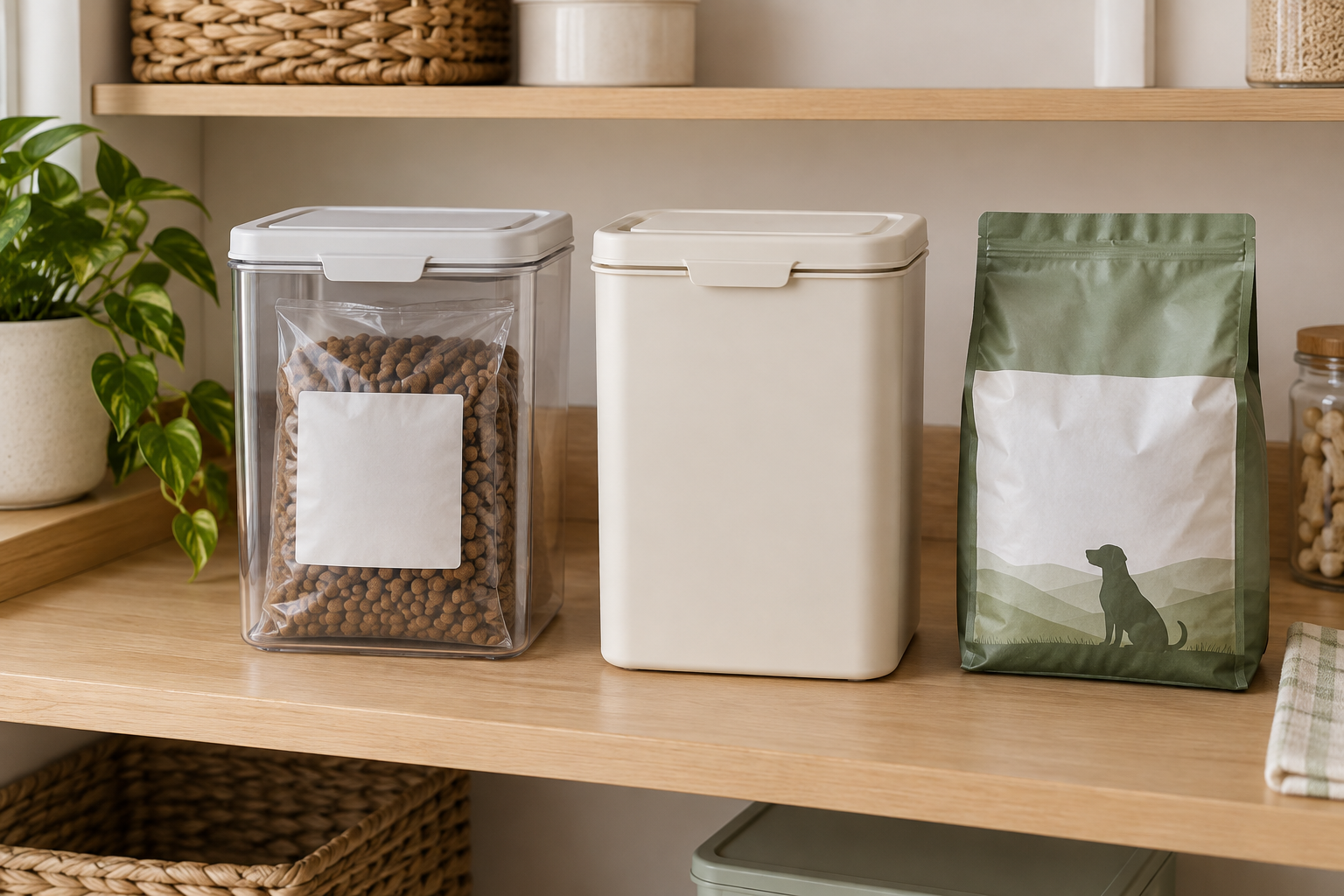
The Quick Answer
A clear body makes the remaining volume and stray crumbs easier to notice without opening the lid. An opaque body hides the contents and may provide a larger uninterrupted label area. Neither choice proves freshness, light protection, pest resistance, food safety, or shelf life. Those depend on the specific product, placement, closure, food package, and manufacturer directions.
Measure the Bag, Shelf, and Access Route
- Original-bag fit: measure the bag after folding or closing it as directed, including the widest seam and enough space to lift it out.
- Usable interior: compare internal dimensions, not only listed capacity or outside measurements.
- Lid clearance: measure the room needed to unlatch, hinge, lift, or remove the lid beneath a shelf.
- Loaded route: consider whether the container stays in place or must be lifted, rolled, or carried for refilling and cleaning.
- Label plan: keep the product name, lot code, best-by information, feeding directions, and maker contact details available.
- Pet access: place the container where pets and children cannot open, tip, chew, or climb on it.
When a Clear Container Fits
Clear sides suit a pantry or cabinet where seeing the supply level prevents surprise refills and where the container can be inspected without moving it. They can also make residue, condensation, scratches, or a damaged inner package easier to notice.
The tradeoff is visual clutter and the temptation to rely on appearance instead of a label. A visible amount does not tell you the formula, lot, date, or feeding directions. Do not infer light protection or storage performance from tint or thickness; follow the food and container makers' instructions.
When an Opaque Container Fits
An opaque body suits owners who prefer a quieter pantry view or do not need to see the supply level continuously. A broad exterior can support a removable label, but that label must stay current when the food changes.
The tradeoff is that inventory and interior condition require opening the container. Build a repeatable check into the feeding or shopping routine. Do not top up indefinitely: empty, inspect, clean, and fully dry the container as its directions require before adding another package or batch.
Label Retention, Cleaning, and Placement
Keeping food in its original bag inside a larger container can retain useful information and reduce direct food contact, but only if the bag fits without crushing, tearing, or blocking the lid. If you transfer food, retain the original package or clear photos of its front, back, lot code, best-by information, and feeding directions.
Follow the container's care directions. Reach corners, lid channels, seals, hinges, wheels, and handles as applicable, then let every part dry fully before reuse. Inspect for cracks, warping, rough edges, damaged closures, persistent residue, or odors. Replace a container that can no longer be cleaned or closed as intended.
Store food according to its package directions and away from household chemicals, litter supplies, moisture, and heat sources. Ask the food maker or a veterinarian if you are uncertain about storing a particular diet; a storage container is an organization tool, not a nutrition or health solution.
Who Should Skip Each Format?
Skip a clear container when you cannot maintain the recommended storage location, the visible contents create unwanted clutter, or the only suitable model does not fit the original bag and label plan. Skip an opaque container when you routinely forget inventory checks or cannot keep an accurate external label.
Skip both when the original package already closes and stores well, another container would make label information harder to retain, the available space cannot support safe lifting and lid access, or the product's directions do not support your planned setup. For other layout choices, compare wheeled and stackable containers or open and lidded storage bins.
Bottom Line
Choose clear for quick visual inventory checks and opaque for concealed contents, but let measured fit, retained package information, access, placement, and cleaning decide. Verify the current product details, follow the food maker's directions, and keep the original package when another container would add work without solving a real problem.