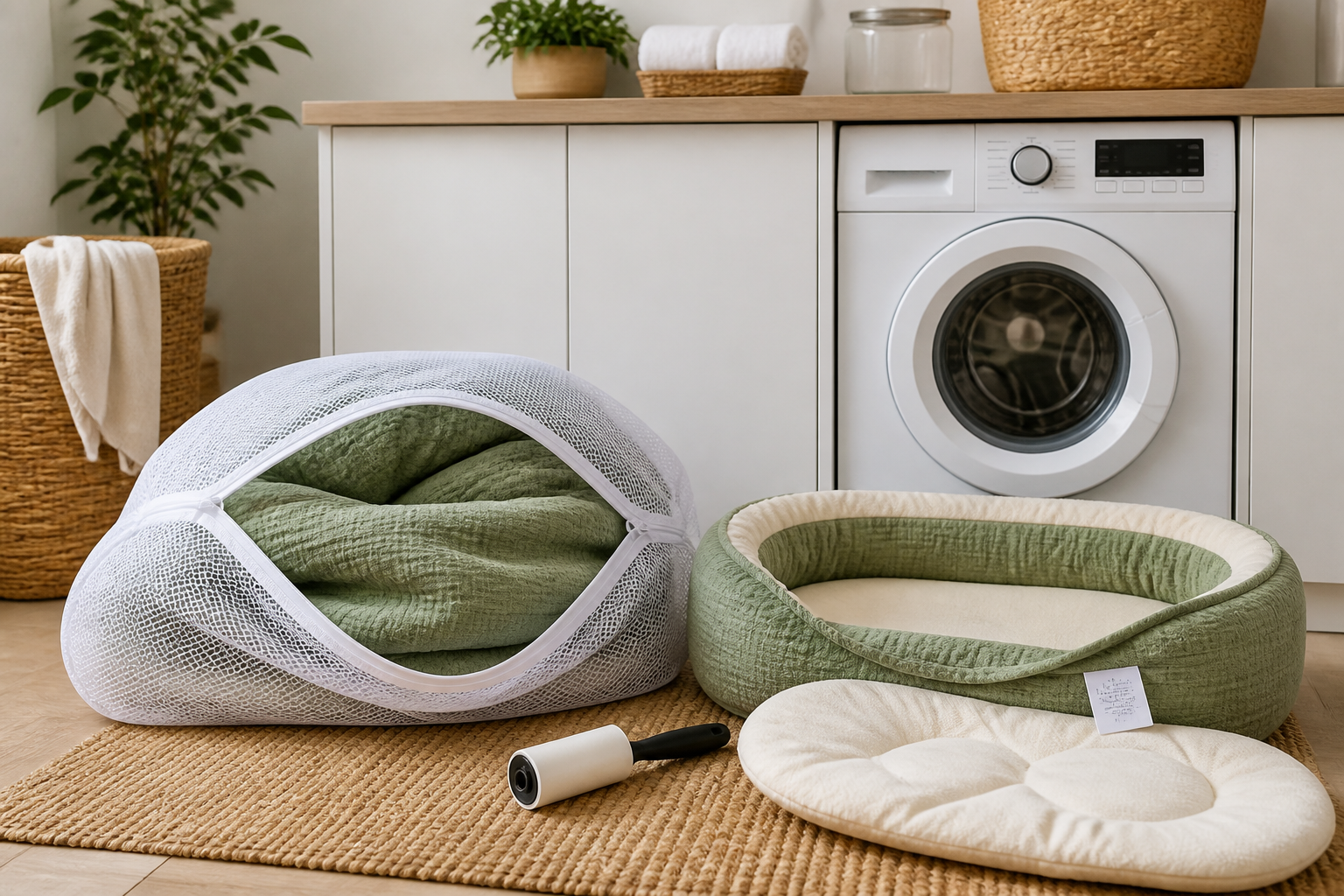
This is a buy-or-skip framework, not hands-on testing and not a promise of machine protection, hygiene, fur capture, or longer bedding life. A wash bag may contain some loose material and keep compatible closures together, but results depend on the bag, load, washer, and care instructions.
Quick Decision: Buy, Skip, Delay, or Repurpose
Buy one when compatible covers or small bedding pieces are washed often, fit loosely inside the bag, and leave enough room in the washer for the load to move according to its manual.
Skip it when separate washing is already manageable, the item is bulky or rigid, the bag would be tightly packed, or the care label calls for hand washing, spot cleaning, or another method.
Delay until you confirm the bag's usable dimensions, closure, seams, wash and dry directions, and your washer's guidance for bulky or unbalanced loads.
Repurpose an existing laundry bag only when its maker allows the intended machine cycle, its closure is secure, and the bedding fits without being forced. An ordinary pillowcase may suit a small compatible cover if it closes securely and both fabrics share suitable care instructions.
The Six-Part Worth-It Test
- Washable item: Does the bedding label explicitly allow the machine-wash routine you plan to use?
- Loose fit: Can the removable cover or flexible mat sit loosely rather than being compressed into the bag?
- Washer room: Does the filled bag fit comfortably within the machine maker's load and balance guidance?
- Recurring need: Is this a frequent enough task to justify storing and cleaning another laundry accessory?
- Secure construction: Are the mesh, seams, zipper, pull cover, and any handles suited to the stated wash method?
- Drying plan: Can you empty, inspect, and fully dry both the bag and bedding after every cycle?
If any of the first three checks fail, a dedicated bag does not solve the underlying compatibility problem.
What a Wash Bag Can—and Cannot—Do
A suitably sized bag can keep a compatible cover and its straps or fasteners in one place. It may reduce how freely some loose fur or hardware moves through the drum, but it does not guarantee that all hair stays contained. Brush, shake, or vacuum heavy loose fur before washing when the textile maker permits it, then maintain the washer gasket, filter, or lint area according to the appliance manual.
The bag does not increase washer capacity. Wet bedding becomes heavier, and a single bulky bundle can become unbalanced. Stop and follow the machine instructions if the load cannot move freely or the washer signals a balance problem. A larger-capacity machine or professional cleaner may be the practical alternative.
Measure the Real Load
- Separate every removable component and identify which pieces the care label permits you to wash.
- Exclude foam, rigid inserts, non-washable fill, electrical parts, and damaged pieces.
- Loosely fold the washable textile as it would sit in the bag; do not compress it to make a nominal measurement work.
- Compare that bundle with the bag's internal dimensions and opening.
- Check the washer manual for capacity, bulky-item, and balance guidance before treating the bag as a complete load.
Cost, Storage, and Maintenance Tradeoffs
A dedicated bag adds purchase cost, storage space, and another item to inspect. Fine mesh may hold more visible debris but can take attention to rinse and clean. Heavier seams and protected zippers may suit frequent routines, while the added material can take longer to dry. No feature removes the need to inspect torn mesh, opening seams, or damaged closures.
One large bag may be convenient, but buying a spare bed cover can sometimes improve the routine more directly because the bed remains usable while laundry dries. Compare that option in the washable replacement bed cover guide.
Who Should Skip One?
Skip a wash bag for a whole stuffed bed that barely fits the washer, an item with a non-removable foam or rigid insert, electrical warming or cooling components, damaged textiles, or any care label that rules out machine washing. Also skip it when an existing securely closing laundry bag already fits the compatible cover and routine.
For bedding contaminated by a substance that needs special handling, or when soiling accompanies illness or a sudden change in your pet's habits, contact a licensed veterinarian for the pet concern and follow appropriate cleaning guidance. A wash bag is a convenience item, not a health solution.
Bottom Line
A pet bed wash bag is worth it when compatible removable bedding fits loosely, the washer can handle the load, and frequent laundry makes containment genuinely useful. It is unnecessary when separate washing or an existing laundry bag already works—and inappropriate when it encourages an oversized or non-washable item into the machine.
For the wider bedding setup, compare washable dog bed formats or browse the comfort and home setup hub.