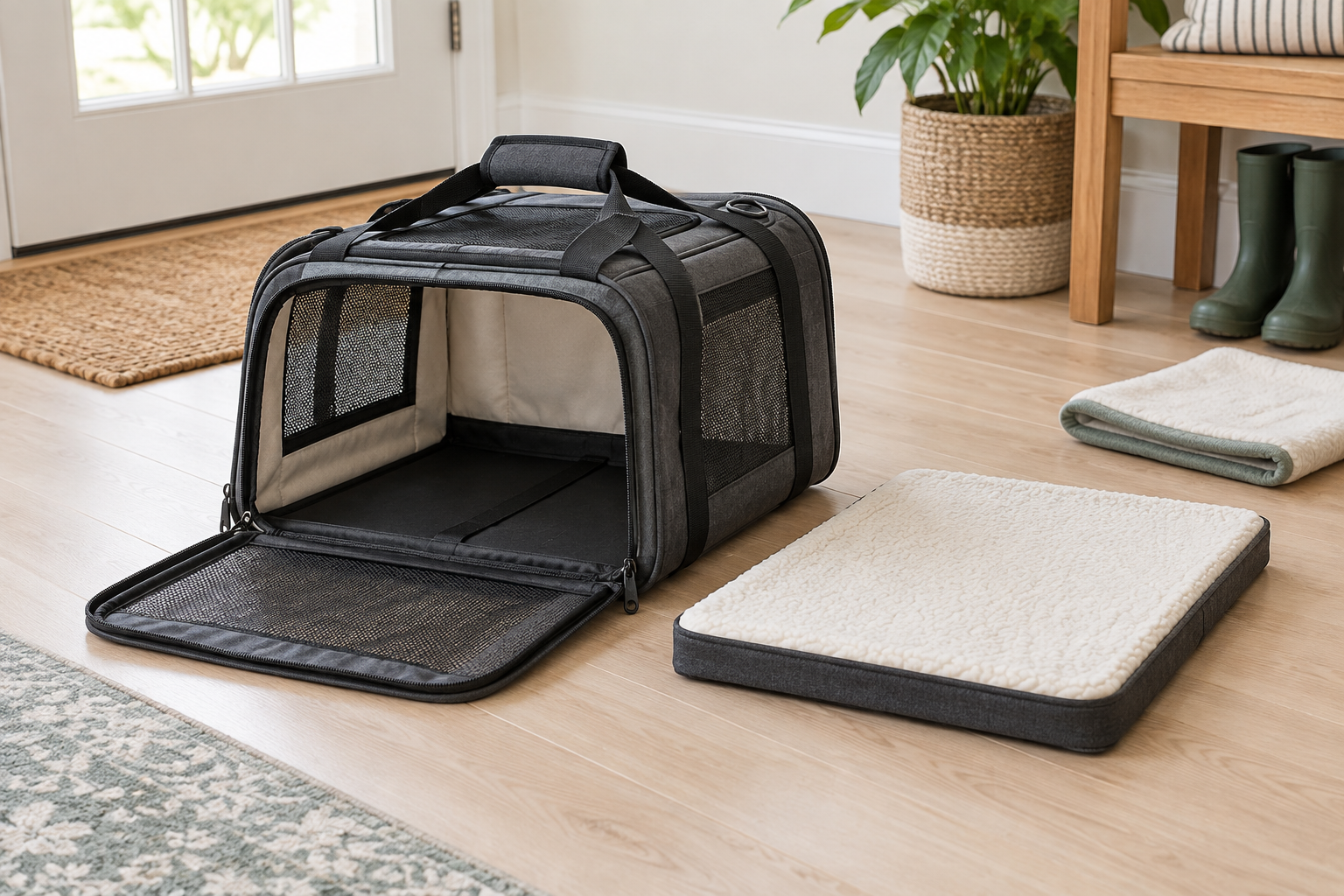
A removable base is a support component, not a repair for the rest of the carrier and not a remedy for travel fear, pain, repeated soiling, or difficult loading. If a pet suddenly resists the carrier, seems painful, becomes ill during travel, or shows unusual distress, contact a licensed veterinarian. A qualified trainer or behavior professional can help with non-medical carrier practice.
Quick Decision: Replace, Re-Cover, Replace the Carrier, or Skip
Replace the base when the insert alone is warped, cracked, swollen, or no longer usable and an exact compatible part is available. Re-cover or add a measured liner only when the structural insert remains sound and the carrier maker permits that setup. Replace the carrier when mesh, seams, zippers, handles, frame, base sleeve, or overall fit is questionable. Skip for now when the issue is cosmetic and the current base remains intact and maintainable under its care directions.
Inspect the Whole Soft Carrier First
- Mesh and fabric: Look for holes, separated layers, fraying, or areas a pet can reach and enlarge.
- Zippers and doors: Operate every closure and inspect sliders, stops, pulls, and stitching.
- Handles and straps: Check attachment points, webbing, clips, and seams without assuming a new floor fixes carry wear.
- Frame and shape: Confirm support pieces sit as designed and the carrier does not collapse into the usable interior.
- Base sleeve: Check that it holds the insert flat and does not have torn corners or an opening that lets the base shift.
- Current fit: Recheck the pet's body dimensions and the carrier maker's current size and weight guidance.
Remove a carrier from use while you resolve sharp edges, exposed rigid material, unreliable closures, torn mesh, broken carry points, or uncertain structural condition.
Exact Fit Is More Than Length and Width
Start with the carrier brand, model, size, and replacement-part information when available. Measure the old insert outside the carrier: full length, width, thickness, corner shape, and any folds or notches. Measure the base sleeve opening and the usable interior after the insert is installed.
A loosely matched board can bunch the cover, bow the walls, obstruct a zipper path, leave an unsupported edge, or steal interior space. Do not cut an unknown material or improvise a rigid panel unless the carrier manufacturer explicitly permits it and gives suitable specifications.
When Base-Only Replacement Earns Its Cost
The clearest case is a frequently used, otherwise suitable soft carrier with a removable base that has absorbed moisture, lost its shape, cracked, or become difficult to maintain under the stated care instructions. A clearly compatible replacement can restore the intended flat support without discarding sound fabric and hardware.
Compare the delivered cost, return terms, cover construction, cleaning directions, insert rigidity, edge finish, and the work needed to confirm fit. A low-cost insert is poor value when compatibility depends on guesswork.
When a Liner Is Enough—and When It Is Not
A washable liner may address routine fur or minor surface cleanup when the insert underneath remains flat, dry, intact, and compatible. The liner must fit without blocking ventilation, narrowing an opening, interfering with closures, or creating loose material that the pet can chew or bunch.
A liner should never hide swelling, cracking, exposed edges, odor that persists after maker-directed cleaning, or loss of support. If the rigid component is damaged, treat that as a base decision rather than a fabric-only problem.
When to Replace the Whole Carrier
Choose a broader replacement when more than one component is worn, the base sleeve cannot retain an insert, the carrier collapses into the pet's space, closures are unreliable, carry points are damaged, ventilation panels are compromised, or the pet has outgrown it. For air, rail, or other regulated travel, check the current carrier requirements directly with the provider; a replacement base does not establish acceptance or safety performance.
Cleaning and Storage Tradeoffs
Follow both the carrier and replacement-part makers' care directions. Remove components only as instructed, use compatible cleaners, and let all layers dry before reassembly. Store the carrier so the base stays flat rather than folded under other supplies. Inspect the insert, sleeve, seams, mesh, and zippers again before each outing.
Who Should Skip a Replacement Base?
Skip base-only replacement when you cannot identify a confident fit, when shipping and return friction outweigh the remaining value of the carrier, when other structural parts are worn, or when the replacement would reduce usable room. Also skip do-it-yourself panels with rough edges, unknown coatings, splinters, or materials the carrier maker has not approved.
Complete the Carrier Setup Carefully
If base replacement passes this audit, compare carrier liners by measured fit and cleaning routine or decide between a washable liner and disposable carrier pad. If the whole carrier needs attention, compare hard-sided and soft-sided formats before buying another version of the same setup.
Bottom Line
A replacement pet carrier base is worth buying when it is the only failed component, the soft carrier remains sound and correctly sized, and the replacement has a confident dimensional or model match. Inspect first, measure the removed insert and sleeve, follow maker guidance, and replace the entire carrier when wear extends beyond the floor.