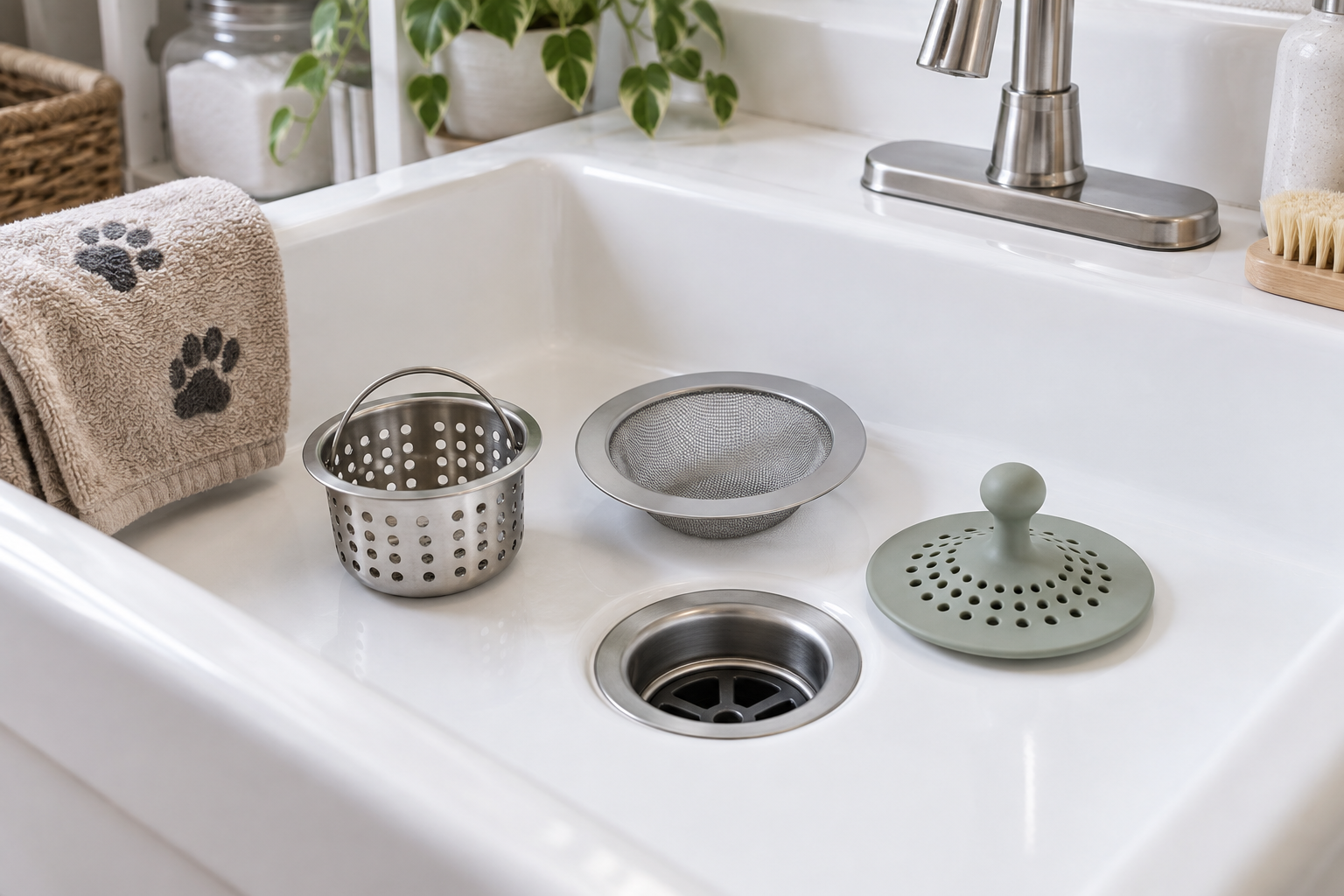
This guide covers removable catchers used during routine rinsing of washable pet gear. A catcher may intercept some loose fur and debris, but water flow, drain design, plumbing condition, and the material being rinsed all matter. Stop using the sink and contact a qualified plumber when drainage is persistently slow, water backs up, fittings leak, or the drain needs repair.
Quick Comparison
Basket catcher: useful when the drain has enough diameter and depth for a removable cup. Fine-mesh screen: useful when fine loose debris matters and a broad flat flange supports the screen. Silicone catcher: useful when a flexible shallow cover can lie flat on a compatible smooth surface. Choose none yet: when an integrated stopper, irregular drain, poor flow, damaged plumbing, or sink instructions rule out an add-on.
Measure the Sink Before Shopping
Measure the clear drain opening, the outer diameter and shape of the flange, and the depth to any crossbars or stopper hardware. Note whether the opening is round, square, recessed, raised, or interrupted by a chain, plug, post, or disposal component. Record all measurements rather than relying on labels such as “standard” or “universal.”
Check the sink and drain manufacturer's directions before removing an integrated part. An add-on that sits proud of the flange can catch fabric; one that is too small can shift into the opening; one that is too fine can slow flow quickly. The product should remain visible and easy to remove throughout the rinse.
Selection Criteria That Matter
- Exact fit: compare the catcher's inner and outer dimensions with the opening, flange, depth, and stopper hardware.
- Opening size: finer mesh catches smaller loose material but may require more frequent clearing to maintain flow.
- Stable placement: the rim or flexible edge should sit as its maker directs without rocking, folding, or disappearing into the drain.
- Removal: a handle, tab, or accessible edge makes it easier to lift the catcher before it becomes overloaded.
- Material: inspect metal edges, mesh joins, silicone tears, discoloration, and corrosion; replace damaged pieces.
- Cleaning: choose a design whose holes, seams, rim, and underside can be emptied, washed, rinsed, and fully dried.
- Storage: keep the clean, dry catcher in a ventilated place away from pets, children, food-prep tools, and household chemicals.
How the Three Formats Differ
Removable basket catcher
A basket offers visible capacity and a handle or rim for lifting, but it needs adequate drain depth and clearance. Large perforations may let fine material pass, while a deep cup can interfere with crossbars or a stopper. Do not force an almost-fitting basket into the opening.
Fine-mesh drain screen
A mesh screen can rest across a flange and catch finer loose fur, lint, or grit. Its tradeoff is flow: fine mesh can load quickly, particularly when a towel releases fibers. Choose a rim wide enough for stable coverage and clear the screen before water begins to pool.
Flexible silicone catcher
A silicone format can conform to a smooth shallow surface and usually has a tab for removal. It may lift, curl, or seal too closely if its shape and drainage pattern do not suit the sink. Check that it lies as directed and does not hide the water level or stopper control.
Use, Cleaning, and Disposal
Shake or brush dry loose hair and debris from washable gear into the trash before rinsing. Place the compatible catcher as directed, keep the drain visible, and use a manageable water flow. Pause to empty it whenever water begins collecting faster than it drains; never press trapped material through the openings.
Lift captured material into the trash rather than washing it back down the drain. Wash the catcher with a product compatible with its material, rinse it, and let it dry fully. Follow the pet item's care label and the sink manufacturer's directions. This is a convenience routine, not a sanitation method or plumbing repair.
Who Should Skip a Drain Catcher?
Skip an add-on when the sink has an integrated strainer that already handles the routine, when the catcher cannot sit securely, or when it interferes with a stopper or required drain component. Skip very fine mesh if the resulting flow is impractical and you cannot monitor it continuously. For bulky bedding, heavily soiled items, or gear that sheds substantial filling or fibers, follow the item's care directions and use an appropriate laundry or professional-cleaning route.
Do not use a catcher to work around repeated backups, leaks, odors from plumbing, damaged fittings, or a drain that stays slow after routine clearing. Those are reasons to stop and ask a qualified plumber, building manager, or property owner for help.
Related Cleanup Guides
For a washable collection point before gear reaches the sink, compare pet cleanup caddies. For wet towels after washing, compare pet towel hamper formats. If the floor around a pet bath is the problem, see the bath mat versus folded towel comparison.
Bottom Line
The best utility-sink pet hair catcher is the removable format that fits the measured drain, stays visible and stable, preserves workable flow, and is easy to empty and clean. Compare geometry before material, clear loose debris before rinsing, and treat recurring drainage problems as a plumbing issue rather than a product-selection problem.