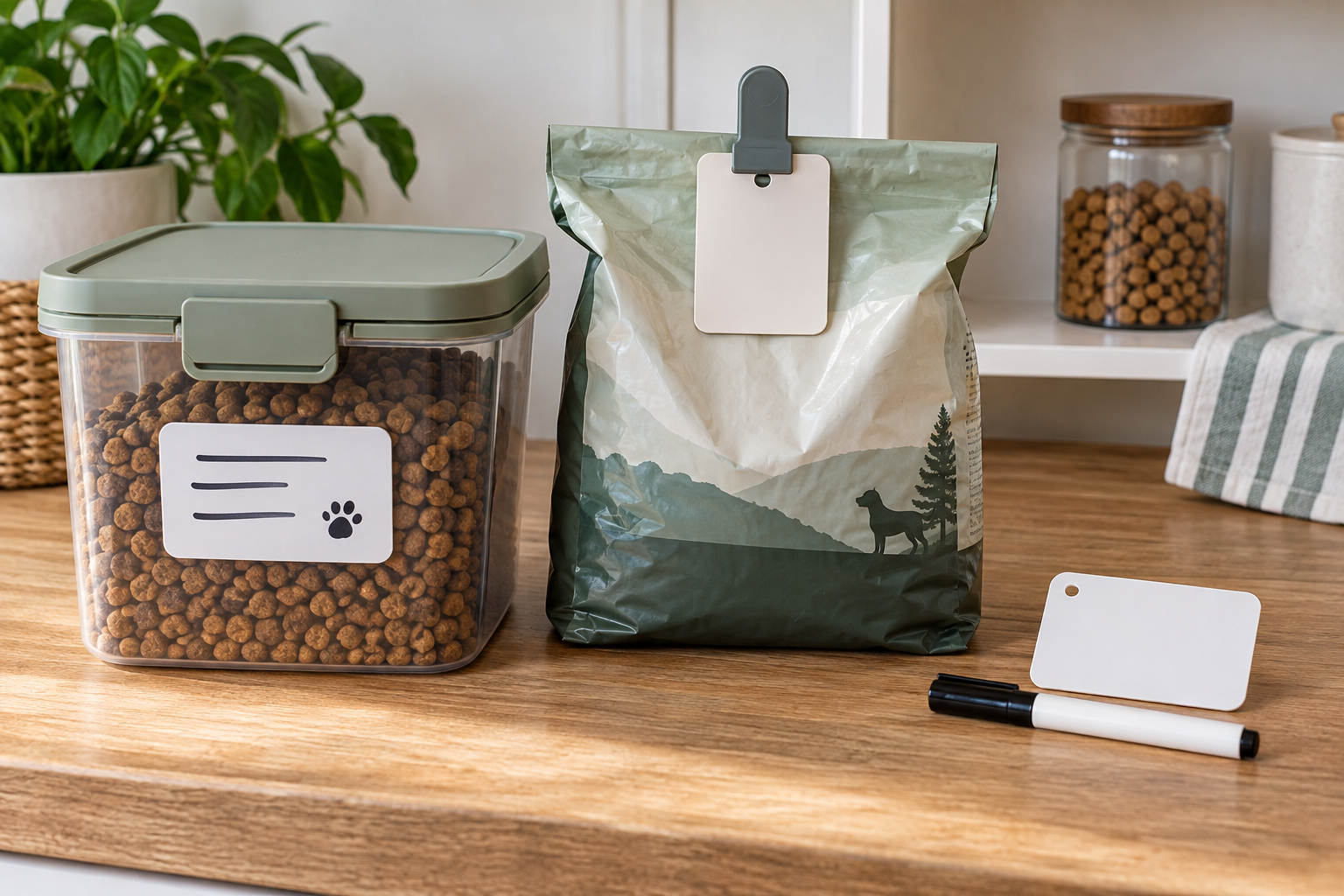
This guide covers optional household organization labels for ordinary packaged pet food and treats. It does not provide nutrition, portion, freshness, safe-storage-time, or diet advice. Follow the food maker's package directions, and ask a veterinarian about feeding amounts, diet changes, appetite changes, or other health concerns.
When a Reusable Label System Is Worth It
A dedicated system can earn its space when two or more similar packages are open, food is regularly moved while its original bag is retained, or several household members need the same simple visual cue. The useful outcome is faster, clearer identification—not a decorative pantry or a second set of feeding instructions.
It is most practical when the same label can be erased fully, attached as directed, cleaned without damaging the writing surface, and moved through the household's real package-change routine. If labels routinely detach, collect residue, hide printed information, or keep outdated notes, they make the setup less reliable.
Run a Five-Minute Package Audit First
Place the currently open packages together and count only genuine points of confusion. Check whether the original product name, formula or variety, lot information, date information, feeding directions, storage directions, and maker contact details remain readable.
- Package count: one clearly marked package rarely needs a separate system.
- Repeated confusion: note what people actually mix up instead of planning for an imagined problem.
- Original information: an extra label must not cover or replace maker information.
- Writing need: decide whether a pet name or simple location cue is sufficient.
- Change frequency: reusable labels help most when packages rotate often enough to justify erasing and checking them.
What to Compare Before Buying
Measure the clear attachment area on the bag, bin, or tag holder. Then check the label maker's listed surfaces, dimensions, marker or pen type, application method, removal directions, cleaning method, and stated reuse. “Reusable” does not mean compatible with every package or endlessly rewritable.
For clip-on pieces, check the clip opening, package fold, hinge, projection into the shelf, and any small detachable parts. For adhesive or magnetic formats, verify the actual surface and removal instructions. Keep markers, loose tags, magnets, clips, and spare parts where pets cannot chew or swallow them.
Preserve a single source of truth. A household cue can name the pet or distinguish two packages, but do not copy feeding directions, make up use-by dates, or add health instructions. When a package changes, compare the note with the new original label before reusing it.
Try a Cheaper Alternative First
Assigning a stable shelf position may be enough when packages are visually different. A suitable household removable label or tag can test whether an added cue improves the routine before you buy a set. Use it only on a surface its maker lists, and remove the old note completely before reuse.
If the real issue is keeping the original bag closed, a label will not solve it. Compare pet food bag-clip formats separately. If the question is whether to transfer food, use the original-bag versus container guide and follow the food maker's storage instructions.
Who Should Skip a Dedicated System?
Skip it when one package is easy to identify, the original label already faces forward, shelf placement prevents mix-ups, or an existing removable note works. Also skip products whose surface compatibility, writing tool, removal, or cleaning directions are unclear.
Do not use a label that covers required information, interferes with a zipper or closure, damages the package, leaves loose pieces within pet reach, or carries an old note into a different product. Stop using damaged clips, cracked holders, curling labels, loose magnets, or markers that no longer erase as directed.
Bottom Line
A reusable pet food label system is worth it when several similar packages create a repeated identification problem and one simple, erasable household cue fixes it without hiding original information. Repurpose a suitable label first, keep the maker's package authoritative, and skip the purchase when one clearly marked package or stable shelf position already works.
For the broader setup, use the new-pet essentials guide. Once the category earns a place, the label-format comparison explains the attachment, visibility, cleaning, residue, and package-fit tradeoffs.